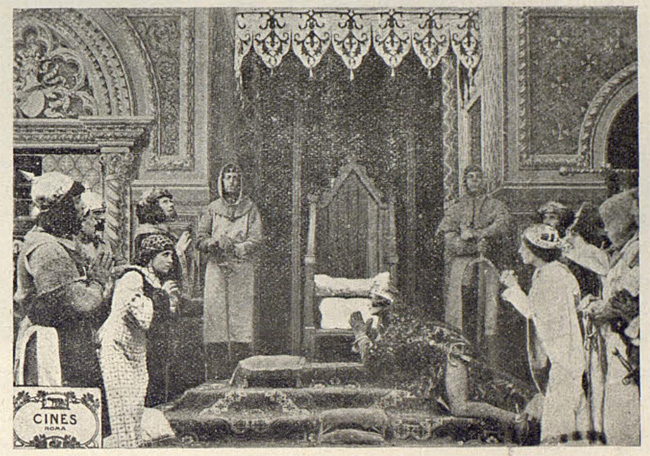
The Stone of Scone Cines 1911

The Stone Of Scone Cines 1911

It is a doubtful point whether it is greater to make history or to re-make it; whether the strong man who bends the years under his hand is mightier than he who, with magician’s touch, raises them from the dead and causes them to live again. At any rate, there can be no question that the reconstruction of the past is one of the greatest triumphs of which man is capable, for to repair the ravages of Time is to open the gates of our own limited age and allow us to enter again into the lives and thoughts and emotions of those long since departed.

Of all attempts at reconstructing history there is little doubt that the cinematographer’s is the most successful hitherto known. Into his magic mirror this modern Cagliostro can summon at will the ghosts of vanished centuries, breathe into them the colour of life, and cause them to move at will by power of his enchantment. It is like looking through a window into the past. One lives now; but one sees then.

Coming to the subject of this little article, we have never seen a more wonderful historical picture than this remarkable film of the Cines Company. It is not merely a portrayal of a single age, but a complete flight through time. We seem to be seated in some witch’s den; a mystical disc of light appears some writing flickers on the wall; and then, as though the world is giving way before us, we are thrown backwards into the earliest ages known to man. An ancient fane rises like a cool, grey shadow, and is peopled with warriors curiously attired. The pageant passes, and we are swept to the Abbey of our own great city as it existed centuries ago. There we are present at the inauguration of a custom which lives still, and but yesterday was celebrated. So are we led through the years, living again in as many minutes the events of a dozen centuries.

As the title of the film and our remarks will have indicated, this picture deals with the history of the ancient stone of Scone, which is now Westminster Abbey, set in the Coronation Chair. Although it is named the Scone Stone, however, its story dates back for hundreds of years before the Scottish church was even founded. The first scene is in the land of the Israelites. We see Jacob, the patriarch, tired by the heat of the day lying down to rest. As a pillow, he takes a large boulder, upon which he lays his head. And this is the origination of the famous stone. A little later we see the stone, already regarded as sacred, being borne into Egypt by the Israelitish emigrants as a memorial of their land. Every detail of this event in Biblical history is faithfully portrayed, and the setting is so perfect that it becomes hard to believe the scene is merely a re-enactment and not a picture of the actual happening. The next voyage of the stone is to Spain, whither it is caried with the greatest circumstance by a Greek prince. In the year 700 b.c. the stone is taken to the top of a mountain by Semon Brech, who declares that it shall be used as a throne there-afterwards. In the year 850 a.p. King Kenneth of Scotland finds the stone amongst some booty taken in war, and he sets it in the nave of Scone Abbey.
In 1296, Edward I., of England, storms Scone Abbey, takes Jacob’s Stone to London, and has it mounted in a chair at Westminster, from which time to the present day it has been used as the throne of kings. This wonderful series of pageants terminates with a picture symbolical of the might of Britain, showing Britannia seated upon the throne with her colonial sons gathered around her.

There is little need for further remarks, but we should like to add a word with regard to the wonderful manner in which the atmosphere of each different scene has been preserved. In a sequence of living tableaux of this kind it is often difficult to create that distinction between the pictures which should exist. The Cines Company, however, have been signally successful in this respect, and every scene bears a complete and separate individuality.

Length. 946 ft. Released August 5th

(The Bioscope)
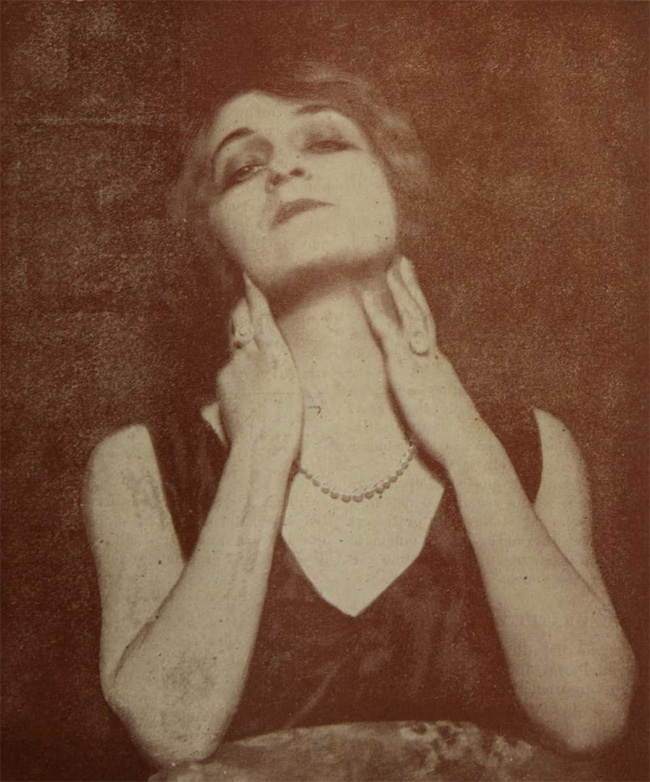
Diana Karenne

La missione del Cinematografo

Contrariamente all’opinione generale la quale sostiene che quella del cinematografo non è un’arte, si può affermare che fra tutte le forme creative essa è la più complicata, la più complessa e la più difficile — in quanto le qualità che si richiedono negli attori non devono accontentarsi di essere istintive ed innate, ma devono essere integrate e perfezionate da una progressiva educazione del gusto e dell’intelletto: a quella stessa maniera che le pietre preziose acquistano maggior valore quando dal loro stato rozzo e naturale sono ridotte, sotto la mano esperta del lavoratore, a gioielli.

E non è vero che la forma esteriore possa scindersi dalla sostanza poiché forma e sostanza sono due elementi che si integrano e si completano a vicenda per raggiungere quella perfezione artistica capace di suscitare una sensazione vibrante di ispirazione e di creazione è possibile di affinare ed educare l’anima ed il sentimento dello spettatore.

Questa arte muta a cui è negata la più grande forza comunicativa umana, quella della parola, (la quale arrivando alle coscienze genera sempre una precisa influenza) richiede e rende necessaria nell’attore una potenza suggestiva, e starei per dire magnetica, tale da potere riprodurre i sentimenti ed i pensieri umani attraverso il silenzio plastico: perfezione, questa, che ben pochi attori sanno raggiungere perché troppi pochi sono quelli che si dedicano allo studio di conseguire questa potenza creativa e comunicativa con coscienza di responsabilità.

Da ciò deriva che la critica mette l’arte del cinematografo sull’ultimo gradino della scala dell’opera creativa.

Il cinematografo avrà certo un grande avvemire, ma ha un mediocre presente: e ciò tanto nel campo artistico quanto in quello industriale. Si può dire che presentemente il cinematografo si dibatte fra il brutto ed il mediocre; ma si deve affermare che quando l’attore e l’industriale avranno trovato la vera via — quella dell’arte — allora anche l’industria trionferà perché rappresenterà la lotta fra il bello ed il perfetto.

Sarebbe forse, a questo proposito, conveniente di dividere la produzione cinematografica in due grandi categorie:

— quella dei film sensazionali, il successo dei quali è basato tutto sulla varietà dell’intreccio e sulla suggestività dell’azione esteriore;

— quella dei film educativi, in cui l’attore trasmette al pubblico tutta la divina sofferenza della subispirazione e la gioia tormentosa della sua creazione.

Si deve riconoscere con franchezza che noi attori cinematografici non abbiamo finora dato nulla di notevole, in senso intellettuale, e ciò dipende dal fatto che fino ad oggi non ci siamo preoccupati di sentire tutta la profonda importanza artistica del cinematografo. Noi ci avviciniamo all’obbiettivo, che rappresenta per noi l’occhio dello spettatore, con una inconscia prepotenza che è male sopportata dal pubblico, il quale con la sua critica indulgente e superficiale impoverisce l’importanza del problema ed aumenta così la difficoltà della soluzione. Invece manifestando la perfezione, dobbiamo incatenare a noi stessi il pubblico e farne il nostro migliore collaboratore: solamente così riusciremo ad ottenere una critica dignitosa e seria.

Tutti uniti nello stesso impeto, animati dalla stessa idealità, pervasi dallo stesso desiderio di raggiungere il meglio — dobbiamo cercare di superarci l’un l’altro in questa nobile gara che ci porterà verso la perfezione che sugli scudi delle nostre nuove battaglie dovrà avere un blasone simbolico: quello dell’Arte.

Diana Karènne
Roma, febbraio 1918

Saetta Film

Saetta Film

Nella perdurante inoperosità delle principali case di films, Domenico Gambino, l’ineffabile Saetta, non ha esitato ad affrontare coraggiosamente la crisi. Così come nei suoi films a sensation affronta le più inverosimili avventure per divertire il suo pubblico che lo ama e lo segue amorosamente nell’aspro cammino artistico.

Saetta ha piantato le sue tende a Torino dopo una non breve permanenza a Degli, dove, mi si dice, ha compiuto alcune pregevoli opere, profondendo in esse la sua inesauribile « verve », il suo brio indiavolato, la sua eterna ironica filosofia del « me ne frego ».

Infatti Saetta — senza essere fascista — è un perfetto « menefreghista ». Le situazioni più scabrose, i passi più difficili, le vicende più dolorose, le raffiche più violente passano e si agitano freneticamente intorno alla sua figura, senza che egli ne sia turbato. Compare talora una lacrima sul suo ciglio: non è che un’attimo di commozione che le fa arrossire, poi lacrima e rossore scompaiono sotto il suo sorriso motteggiatore.

Quella che ho visitato in questi giorni è una nuova Saetta Film. Una Saetta Film creata a somiglianza del suo titolare e direttore generale. Tutti scapigliati, tutti allegri, tutti spensierati. Mossi unicamente dal desiderio di creare dei films che piacciano al pubblico, che lo ricreino, che gli facciano dimenticare per un’ora le melanconie di questa ignobile cosa che è la vita.

Alla Saetta è finito recentemente Saetta e la Ghigliottina, e si inizia ora la lavorazione di Quel ficcanaso di Saetta! dovuto alla fervida fantasia di Emilio Vardannes.

Di questo soggetto si parlerà diffusamente nei prossimi numeri: ora, mandiamo a Saetta e ai suoi valorosi collaboratori il nostro augurale saluto e l’espressione della più viva ammirazione.

Torino, gennaio 1923