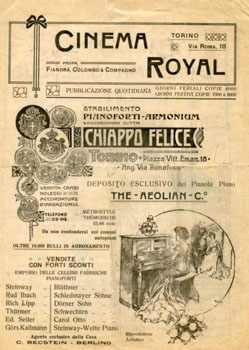
Torino, 11 gennaio 1913. L’inaugurazione del cinema avvenne alla presenza delle autorità cittadine e di pubblico scelto e numeroso, che decretò al nuovo cinema il primato fra i bellissimi ed eleganti ritrovi della Città.
Infatti il Cinema Royal non solo vanta superbe sale di aspetto, oltre la bellissima delle proiezioni, ma può giustamente proclamarsi un ritrovo aristocratico, per le comodità di cui dispone, ed anche perchè risponde a tutte le esigenze moderne.
L’ing. Giacomo Salvatori studiò e pose in atto la forma architettonica, riuscitissima di questo teatro di proiezioni, al quale i F.lli. Catella diedero lussuosa veste di alabastri mentre la Ditta Lombardi si occupò della bellezza estetica della parte muraria, rivestendola di piastrelle che affermano ancora una volta la bontà di questo sistema ornamentale.
I mobili non permettono di desiderare di meglio e sembra, anzi, che vi sia stato un oculato studio della casa fabbricante, Celestino, tanta è stata la sobria ricchezza dell’intero mobilio, in relazione con i velluti ed i drappi, forniti dalla Ditta Calderan.
Il cinema Royal è sito nel punto più centrale della Città, via Roma 18, dove facilmente il passante lo distingue allo scintillio delle potenti lampade Brunt azionate dal macchinario elettrico impiantato dalla ditta Chiadò-Viret.
L’effetto sorprendente delle mille lampade e dei riflessi degli ottoni e della ricca balaustra, forniti dalla Ditta Colombino e Sacco, a chiunque osservi dalla strada, indubbiamente sarà il primo incentivo a far desiderare la visita dell’interno, che attira e invoglia a ritornare.
Ai proprietari sigg. Fiandra, Colombo & C., che incuranti del grave sacrificio finanziario, dotarono la nostra città di questo elegantissimo locale, vadano i nostri migliori auguri e le nostre sincere felicitazioni.
Veritas (La vita cinematografica, 15 gennaio 1913)
Bibliografia: Una Città al Cinema – Cent’anni di Sale Cinematografiche a Torino 1895-1995, a cura di Maria Grazia Imarisio, Diego Surace, Marica Marcellino – Agis Neos Ed. 1996.
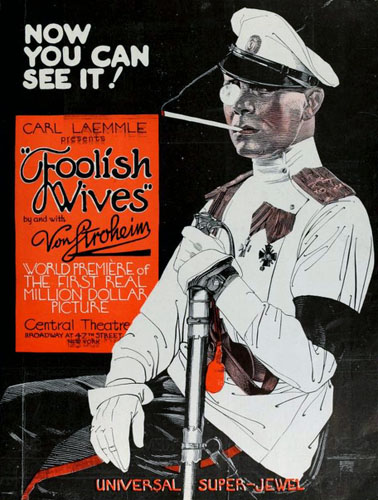
After taking nearly a year to produce, and another year to prepare for presentation, the much heralded “Foolish Wives” has arrived on Broadway (Wednesday, January 11, 1922) with the customary ovation accorded the more important film productions. Erich Von Stroheim‘s picture is one that is imbued throughout, from the first to the very last shot, with visual appeal and it is that element of gorgeousness that establishes the production as a million dollar affair. It would be impossible to go into detail here as to the elegance and superbness of the specially constructed sets that have cost small fortunes to build. But accuracy of detail was an essential, and Monte Carlo is offered in replica for the satisfaction of those who may have seen the original, and for the imagination of those who know it not. Casinos, palatial residences, and beach resorts too numerous to tabulate, offer the enchanting backgrounds against which Von Stroheim‘s story of an arch villain is portrayed.
As shown at its premiere, “Foolish Wives” ran three hours and forty minutes, with a five minute intermission, or approximately fourteen reels. Regardless of the magnificence and quality of either story or production, this is extreme for screen entertainment, or any other theatrical program for that matter.
The most important and immediate need of the picture is absolute and certain cutting. It cannot hold the attention of any audience for the length of time consumed by its present fourteen reels. Much of Von Stroheim‘s excellent, but none the less tedious, detail must necessarily come out to speed up the action and secure a better interest from the spectator. The ending, particularly, is especially dragged, with a flash of this and a flash of that, until it would seem that they never would reach the end. As originally shown the film ran over 14,500 feet, but after the opening night this was cut over 2,500 feet.
As a director, Von Stroheim asserts his mastery through his skilful handling of a not altogether nor universally appealing story. His development and characterization, notably in the way of detail, is convincing and rarely does he neglect minor bits except, maybe once, when he appears spick and span after wading for a considerable time through the marshes, while his fair companion looks much the worse for the experience. But this is not a frequent occurence and for the most part, everything else is distinctive. A melodramatic twist in which a fire plays an important part is followed by one of the picture’s weakest points, that of the birth of a child. The idea that the child will bring a reconciliation between the wife and the husband who has cause for doubt, is clear, but not a bit more convincing, since the husband’s character was intended to represent a fine, understanding type of American manhood. Some of the punches in the production are extremely unusual. Notable among these is the fire sequence, the marine with his forearms shot off, the storm, and many others.
“Foolish Wives” presents Erich Von Stroheim as the most convincing and thoroughly hateful villain of all time. His performance can best, and really only, be appreciated by actually witnessing it. He has selected a company of players which render individually fine performances. Mae Bush and Maude George, as two Countesses and cousins of the Count, are excellent, while Dale Fuller as a maid in the Count’s home, and also one of his victims, is effective in a difficult role. A great number of minor parts are also well handled and in many of the scenes thousands of extras appear.
Princesses Olga and Vera live in a luxurious home with their cousin. Count Sergius Karamzin. The spectator is aware that the trio are frauds who gamble at the casino at Monte Carlo, with counterfeit money. It is the Count’s business to make the acquaintance of notable visitors to further their schemes. So it is he effects an introduction to Mrs. Hughes, the beautiful young wife of an American Envoy. In the course of events, it transpires that the Count picks his women victims at variance. One is a maid in his home, another the half-wit daughter of Ventucci, a counterfeiter, and finally, after a carefully laid ruse, he traps the American woman. Honor is nothing to him. He asks her to aid him financially. She goes to him and the two are locked in a tower which is set on fire by the jealous and betrayed maid, who then commits suicide to hide her shame. The Count and Mrs. Hughes are rescued and the birth of her child secures her husband’s forgiveness. The same night Sergius attacks the half-wit girl and is killed by her father and thrown into the sewer. Finally the two “Countesses,” in reality international crooks, are exposed. (The Film Daily, January 15, 1922)
Ho preso la macchina del tempo e sono ritornata al 1927. Volevo interrogare Fritz Lang intorno alla genesi di Metropolis. Come sapete il film fu presentato, in versione integrale, il 10 gennaio 1927 all’Ufa-Palast am Zoo di Berlino. Ecco cosa mi ha detto:
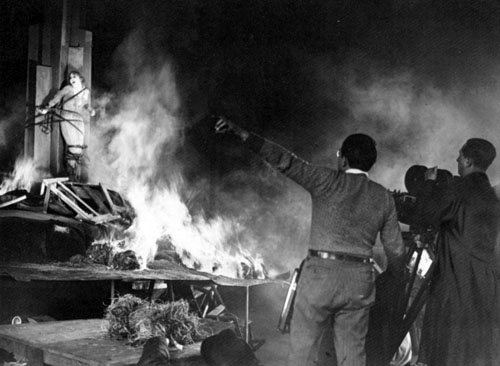
«Il nocciolo primitivo è stato l’idea del supplizio di una strega. Mi sono domandato se questo fenomeno, comunissimo nel Medioevo, era ancora possibile oggi e quale forma avrebbe potuto prendere nell’era dell’automobile, dell’aviazione e della radio.
Da questa idea è scaturita quella dell’uomo-macchina che ha da tanti secoli incuriosito i più formidabili ingegni e che oggi sembra meno realizzabile. Durante un mio viaggio a New York fui colpito dalla immensità e del movimento prodigioso di quella città tentacolare e così mi sorse l’idea di fermarne sullo schermo i vari aspetti ed il ritmo febbricitante. Si aggiunga che, come molti contemporanei, io ho sempre amaramente deplorato le lotte che dividono le caste ed i popoli stessi. Troppo profonde sono le differenze dei vari stadi intellettuali, sicchè una conciliazione profonda non si potrebbe avere senza dei generosi slanci di cuore. Questa idea, che potete chiamare, se vi pare, sociale, religiosa, o perfino mistica e che mia moglie ed io abbiamo incarnata nell’eroina del soggetto di Metropolis, è espressa nell’assioma finale: il cuore deve fare da intermediario tra il cervello e il braccio. Qualcuno osserverà che questa idea è una semplice questione di buon senso; e, tuttavia, pare che non tutti siano di questo parere. Io credo che il mio film avrà un grande valore di propaganda dell’idea dell’ordine, della necessità del lavoro, della necessità della collaborazione tra le varie classi sociali e tra i vari popoli.»
Volevo raccontare a Fritz Lang che Metropolis è diventato un classico del cinema da molti anni, ma è stato portato via dai dirigenti dell’Ufa che volevano parlare subito con lui di certi tagli al metraggio. Chissà come avrebbe reagito se lo informo di tutti i tagli che un po’ ovunque sarebbero stati fatti al film dopo questa prima berlinese. Avevo portato con me il Blu-ray di The Masters of Cinema, ma poi mi sono resa conto che non avrebbe mai potuto vederlo.
Voi invece potete vedere la versione restaurata del 2010, la più completa di tutte le versioni del film edite finora. Ecco il sito dedicato a questo restauro, con tanti documenti e informazione sul film. Buona visione!