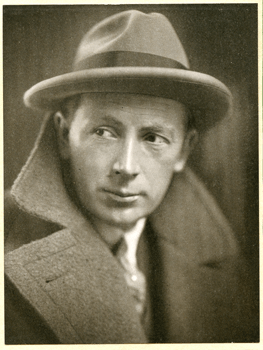
Il questionario di Friedrich Wilhelm Murnau

F. M. Murnau
F. W. Murnau 1927

L’altro giorno August Blom, ieri Marlene Dietrich, oggi Friedrich Wilhelm Plumpe, alias Friedrich Wilhelm Murnau, nato a Bielefeld nel 1888 e “Nosferatu” (non-morto) per grazia del cinematografo. Grande settimana per la settima arte!

Vi confesso un piccolo segreto: molti, tanti anni fa, scrissi una storia ispirata a Murnau, Nosferatu per grazia del cinematografo, un soggetto per il cinema. La storia di una giornalista inviata ad intervistare un vecchio regista e… (il resto, forse, un giorno del prossimo 2012, centenario della morte di Bram Stoker). Devo ritrovarla, dovrebbe essere in qualche scatola… Una volta scrivevo soggetti: per la radio, per il cinema…

Lasciamo stare per il momento la storia della mia vita e torniamo a Murnau. Sicuramente avete sentito parlare del questionario di Marcel Proust, e del questionario Murnau avete mai sentito parlare?

Il questionario Murnau era una prova alla quale F. W. sottoponeva gli aspiranti ad un ruolo nei suoi film. Eccolo:

1. Datemi due sinonimi di emozione.

2. Se il vostro volto non è nel campo dell’obiettivo della macchina da presa, in che modo esprimereste con il resto del corpo, paura, divertimento, ansia?

3. Il monocolo si porta nell’occhio destro o nell’occhio sinistro?

4. L’ultimo libro che avete letto?

5. Descrivete l’aspetto di una femme fatale.

6. Quale artificio di trucco rende ai clowns il suo perpetuo sorriso?

7. Quale sarebbe la vostra qualità più importante per garantirvi un futuro sullo schermo?

8. Sapete descrivermi la differenza fra temperamento e carattere?

9. A cosa servono i primi piani?

10. Quale interpretazione cinematografica vi ha più colpito, e perché?

Buona fortuna con il questionario a tutti gli aspiranti alle glorie dello schermo, se volete, fatemi sapere.
Alles Gute zum Geburtstag Marlene!

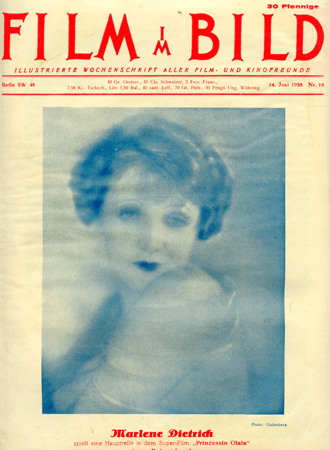
Marlene Dietrich
Marlene Dietrich, copertina di Film Im Bild, 14 giugno 1928

«Marlene Dietrich spielt eine Hauptrolle in dem Super-Film Prinzessin Olala – Regie: Robert Land» Testo nella copertina della rivista Film im Bild, una delle prime copertine (forse la prima) dedicate a Marlene Dietrich. Era il 1928…

Cosa posso raccontarvi di Marlene? … Avrei bisogno di un blog tutto per lei. Vi lascio il link al sito ufficiale

Cara Marlene, scusa se mi permetto la familiarità, è un vero piacere rivederti spesso al cinema muto – potete vedere qualche esempio qui , Cafe Elektric, musica di Gerhard Gruber – e sonoro, grazie di tutto e buon 101° compleanno!

Owen Nares: Why I Like and Dislike Film Acting

I do both like and dislike acting before a film camera. I like it because of the relief it affords me from the monotony of stage work.

This is particularly so if I am acting in a play which is enjoying a long run.

The monotony of playing the same part night after night for two and three years is obvious to anyone. It also confines one to the town (or very near it) where the show is playing.

Lack of variety in one’s work does not tend to restfulness. You get into a groove and, like Micawber, would welcome something to turn up to jog the monotony.

The Earth for a Stage

I always find film work strangely restful, which is a great comfort. And only a busy actor can appreciate the real significance of a restful occupation. In the production of a film there are numberless “waits.” Curiously enough, this waiting about generally gets on the nerves of most artists. But I always manage to rest more during periods of taking a film than on a day I have no film engagement.

Plenty of Variety

The scenes for film productions are for the most part conducted amid beautiful pastoral surrounfings, which I thoroughly enjoy and appreciate.

Further, cinema acting is interesting work as opposed to stage work. Freedom of movement alone is of tremendous assistance to an actor. The average space of a stage in most of the theatres in the Kingdom is twenty square yards.

In a film, space is almost illimitable, providing it is in the focus of the camera.

The advantages thus gained are inestimable, and enables actors and actresses freedom of movement they desire, but cannot obtain, on the legitimate stage.

Screen acting calls for quite a different form of expression too. The eyes play an important part, whilst without facial expression an actor who is successful on the stage would assuredly fail before the camera.

Evening-Dress in the Morning

My reasons for disliking film acting are several.

The horror of driving about the countryside or suburbs with a yellow face, wearing evening-dress at ten o’clock in the morning, I confess I do not relish.

A yellow make-up is, of course, essential for film acting. When it is confined to the precincts of a studio, comment would be superfluous, but outside it…

Several “Reel” Wedding Days

I was once suspected of being a German spy by a dear old lady when operating in St. James’s Park in a propaganda film.

But far worse than this! I have been married several times on the film. Once the inevitable crowd that assembles to watch a film  “take” thought it was a real wedding.

£250.000 for Five Years’ Work

I have received some tempting offers to visit the States and do film work. And I realise the wonderful money to be earned there. My best offer was made to me by D. W. Griffith, who offered me work there which was to realise £250.000 in five years.

I preferred to stay in England and act.

Owen Nares (The Picture Show, May 3, 1919)