Escursione alle Meteore – Eclair 1912

Escursione alle Meteore
Escursione alle Meteore 1912

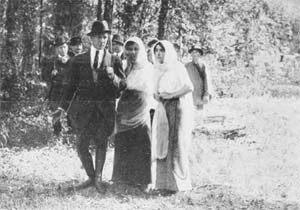
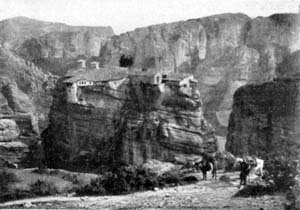
Sopra lo sprone di montagne chiamate Meteore, situate in Grecia, i monaci greci hanno costrutto i loro conventi.

Queste immense rupi scoscese e selvagge visitate soltanto da uccelli di preda, dominano la vallata. Il panorama è meraviglioso.

Appollaiati quasi come nidi d’aquila sulla sommità dei picchi il Monastero di Santo Spirito e della Trinità si confondono coi macigni. Per accedervi il visitatore vien rinchiuso in una rete sospesa a una corda che sale per mezzo di una carrucola; egli è così sopra il precipizio per tutta la lunghezza della parete liscia della rupe. La discesa è ancor più pericolosa.

I chiostri sono di una curiosa architettura e non si può non ammirare il coraggio e la pazienza di questi uomini per costruire simili edifici, sopra un macigno inaccessibile e capace di sfidare le ingiurie dei tempi.

Film dal vero. Titolo alternativo: Ascensione alle Meteore.

L’Emigrante, Itala Film 1915 primo film italiano senza titoli e sottotitoli


(dal canale SACCOAle su YouTube)

Tanto per mantenere la promessa fatta qualche mese fa al collega di E Muto Fu, qualche appunto sull’avventurosa e contrastata storia del primo film italiano senza titoli e sottotitoli:

All’ultimo momento l’Itala Film ci comunica una notizia che ci riempie di stupore: alcuni compratori di films, collo specioso pretesto che i proprietari di Cinema (fortunatamente esclusi quelli di Torino) si rifiutarono di proiettare L’emigrante senza titoli e sottotitoli, hanno obbligato la Casa di aggiungerveli, diversamente non avrebbero ritirate le copie impegnate!
Non facciamo commenti, perchè dovremmo usare parole riventi contro codesti speculatori incapaci di concepire il bello ed il nuovo: per costoro la cinematografia deve sempre rimanere allo stato primitivo, perchè trattano tuttora il pubblico che frequenta le Sale di proiezione come un branco d’imbecilli e di ignoranti!
Qui in Torino, come a Genova, a Spezia, ecc. L’emigrante si è proiettato senza titoli, ed il pubblico ne è rimasto soddisfattissimo, apprezzando l’innovazione; perchè negli altri paesi tale cosa è impossibile?
(nota della redazione pubblicata nella rivista La vita cinematografica, dicembre 1915)

L’innovazione del film senza titoli e sottotitoli (nel 1915) ebbe invece pieno successo all’estero: “All’Italia spetta l’onore di aver presentato la prima film senza sottotitoli”, dall’articolo The Passion Plays of Italy, pubblicato nella rivista inglese The Bioscope.

The Passion Plays of Italy


The Emigrant (L’emigrante), Itala Film 1915, with Ermete Zacconi “first intelligible moving picture without sub-titles” (music by Alessandro Sacco’s string quartet)

London, September 1916. The schools of Milano, Ambrosio, Itala, and the rest of them, have so far remained faithful to the dominant tradition of all South Latin drama – whether acted in dumb show or otherwise – in that the preponderating majority of “serious” films that have come from them have dealt almost exclusively with some aspect of the eternal duel of sex. We call it passion when we wish to convey that it possesses glitter and grip. But, indeed, the Italian renderings of our passion are quite often the raw, literal thing – what we should name in another connection, a “thundering bad temper”. Italian love-making can look extremely ludicrous to English eyes; just as English love-morals (as depicted on the screen) can be well-nigh incomprehensible to the citizens of Naples or Milan. Exactly how far either is to be taken as a sample of the actual thing it is not the purpose of this paper to inquire. Doubtless the cinema art of Italy has as much to do with the real lives and loves of the people as the equivalent representation in any other country has to do with them. The point is that, even if it wanted to, the film drama of Italy would scarcely be allowed by its intenser devotees to wander for long off the beaten track of “passion” and “intrigue,” with all the calamitous and tempestuous adventures that this guilty pair (especially in a land so rich in volcanoes) are apt to bring in their train.

When the Italian film does get off this track and strike out on a novel line of its own it certainly does not strike inward, either nationally or psychologically. You could not infer much of the Southern character and temperament, nor even many of the customs and observances current on the banks of the Tiber, from the tiny reflection of them which manages to get on the screen. But the Italian producer has a sort of instinctive wisdom in these matters after all. It was in his own original tongue that the famous recipe for restless crowds was first pronounced – panen et circences. The chiefs of Itala and Milano – not, of course, to mention Armando Vay – are “great” at circuses. The “science of the spectacle” has never been pushed to more daring lengths than in some of the gigantic “sets,” peopled with richly varied crowds and groups backing and flanking a trio or so of uncannily clever principals, which have been staged in the Italian studios. The “great act,” if sufficiently sensational, will always carry the weak story on its back in a film play – and in most Italian stories of this nature the “great act” is advisedly athletic in more senses than one. In the lesser novelties lately the love element has pursued its somewhat monotonous course, eked out with a panther, an escaped maniac, or a wonderful “double,” who deceives everybody in the picture up to the last moment, but nobody in the picture-house for a second. Dramatic invention of the plausible kind is not the most conspicuous gift of film writers either in Italy, but at the scène à faire (which may be translated as the “scene which does the trick”) they have ab unrivalled imagination. When the spectator’s imagination happens to be in accord with it the picture can speak with no uncertain voice. Those who prefer the amorous exotics may be recommended not to miss Inspiration, in which Signorina Menichelli comes out both bold and beautiful. The first version of this film, entitled Fire, was more Italian, but less to the taste of the Censor. Enough is left, however, to mark the Latin tradition in affairs of this kind. It is to be regretted that Hesperia has been seen but rarely in English picture theatres since the war broke out; while Bertini, so far as we are concerned, might be merely a stock illustration in La Vita Cinematografica for all we see her.

But the greatest landmark of Italian film history, when all is said, is Cabiria, and it is long likely to remain so. This is the production which was put back in the box almost as soon when first brought to England. At a second venture it leapt into fame, and received a “publicity” in keeping with its own giant proportions. It was the means of “discovering” a new actor Maciste; and it offered ad least one ineffaceable impression for these times in the scene of the great god Moloch. This wonderful, horrible episode, in a drama which lacked nothing in terrors and excitements, burned into the brain for months, and can never be quite forgotten. An alternative, and more realistic, rendering of this deity’s insatiability can now be seen in the pictures featuring the Battle of the Somme.

To Italy belong the honour of having turned out the first intelligible moving picture without sub-titles. It remains to be seen whether the Spanish producer and plot-man combined can found a school of pictures, even with all the literary impedimenta, which shall satisfy and gratify the Northern palate. Failing that, we shall pin our faith to the Tourist and Industry “short-lengths” for telling the British spectator alla he wants to know about Spain in film form.

D. Z. J. Gillingham (La Vita Cinematografica, 22/30 novembre 1916)