The Stone of Scone Cines 1911

The Stone Of Scone Cines 1911

It is a doubtful point whether it is greater to make history or to re-make it; whether the strong man who bends the years under his hand is mightier than he who, with magician’s touch, raises them from the dead and causes them to live again. At any rate, there can be no question that the reconstruction of the past is one of the greatest triumphs of which man is capable, for to repair the ravages of Time is to open the gates of our own limited age and allow us to enter again into the lives and thoughts and emotions of those long since departed.

Of all attempts at reconstructing history there is little doubt that the cinematographer’s is the most successful hitherto known. Into his magic mirror this modern Cagliostro can summon at will the ghosts of vanished centuries, breathe into them the colour of life, and cause them to move at will by power of his enchantment. It is like looking through a window into the past. One lives now; but one sees then.

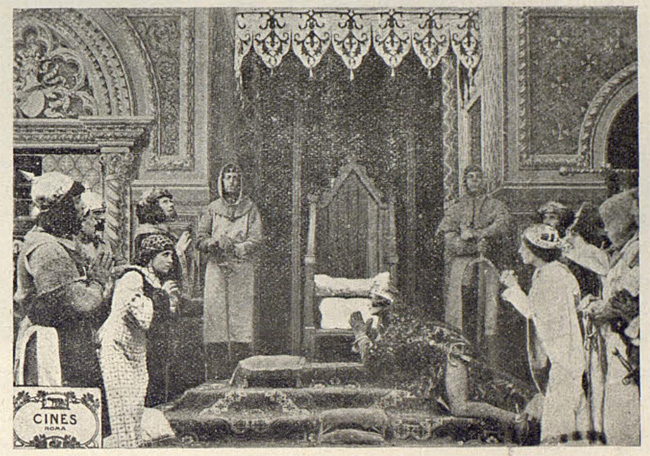
Coming to the subject of this little article, we have never seen a more wonderful historical picture than this remarkable film of the Cines Company. It is not merely a portrayal of a single age, but a complete flight through time. We seem to be seated in some witch’s den; a mystical disc of light appears some writing flickers on the wall; and then, as though the world is giving way before us, we are thrown backwards into the earliest ages known to man. An ancient fane rises like a cool, grey shadow, and is peopled with warriors curiously attired. The pageant passes, and we are swept to the Abbey of our own great city as it existed centuries ago. There we are present at the inauguration of a custom which lives still, and but yesterday was celebrated. So are we led through the years, living again in as many minutes the events of a dozen centuries.

As the title of the film and our remarks will have indicated, this picture deals with the history of the ancient stone of Scone, which is now Westminster Abbey, set in the Coronation Chair. Although it is named the Scone Stone, however, its story dates back for hundreds of years before the Scottish church was even founded. The first scene is in the land of the Israelites. We see Jacob, the patriarch, tired by the heat of the day lying down to rest. As a pillow, he takes a large boulder, upon which he lays his head. And this is the origination of the famous stone. A little later we see the stone, already regarded as sacred, being borne into Egypt by the Israelitish emigrants as a memorial of their land. Every detail of this event in Biblical history is faithfully portrayed, and the setting is so perfect that it becomes hard to believe the scene is merely a re-enactment and not a picture of the actual happening. The next voyage of the stone is to Spain, whither it is caried with the greatest circumstance by a Greek prince. In the year 700 b.c. the stone is taken to the top of a mountain by Semon Brech, who declares that it shall be used as a throne there-afterwards. In the year 850 a.p. King Kenneth of Scotland finds the stone amongst some booty taken in war, and he sets it in the nave of Scone Abbey.
In 1296, Edward I., of England, storms Scone Abbey, takes Jacob’s Stone to London, and has it mounted in a chair at Westminster, from which time to the present day it has been used as the throne of kings. This wonderful series of pageants terminates with a picture symbolical of the might of Britain, showing Britannia seated upon the throne with her colonial sons gathered around her.

There is little need for further remarks, but we should like to add a word with regard to the wonderful manner in which the atmosphere of each different scene has been preserved. In a sequence of living tableaux of this kind it is often difficult to create that distinction between the pictures which should exist. The Cines Company, however, have been signally successful in this respect, and every scene bears a complete and separate individuality.

Length. 946 ft. Released August 5th

(The Bioscope)
Noces d’or 1911

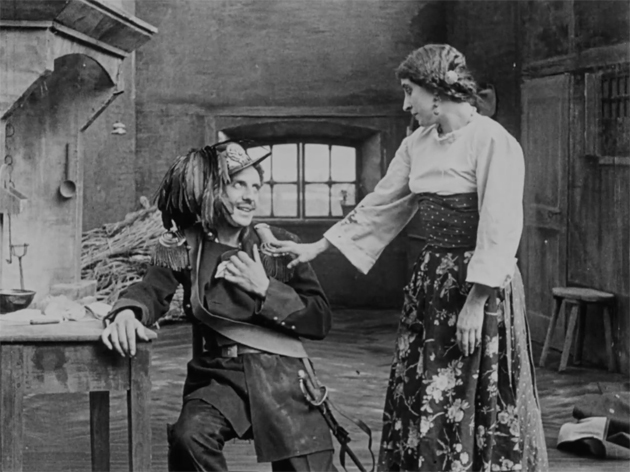
Nozze d’oro (Noces d’or) Alberto Capozzi et Mary Cleo Tarlarini

La bataille de Palestro — épisode-clef de la seconde guerre d’Indépendance — est le noyau de Noces d’or (Nozze d’oro), réalisé en 1911 par la société Ambrosio, de Turin, film qui s’affirme comme un des plus gros succès internationaux de l’époque. Le metteur en scène est Luigi Maggi, l’opérateur, Giovanni Vitrotti, les interprètes, Alberto Capozzi, Mary Cleo Tarlarini et Maggi lui-même. Mais la paternité authentique du film doit probablement être attribuée à Arrigo Frusta qui, dans la firme Ambrosio, est une sorte de « chef du service sujets », mais, en réalité, l’animateur, le superviseur et le contrôleur de toute la production. « Un véritable chef-d’oeuvre — dit une publication cinématographique de l’époque —, un joyau de l’industrie cinématographique, qui est tout à l’honneur de la grande Maison de Turin, qui (…) a réussi à faire vibrer la corde patriotique en évoquant un épisode de cette heureuse Histoire que la Nation italienne célèbre cette année, par les deux grandes expositions Turin-Rome et par des fêtes ». En effet, c’est l’année du cinquantenaire, et Noces d’oro (Nozze d’oro) remporte le premier prix au concours cinématographique organisé pour la circonstance par le Comité de l’Exposition Internationale de Turin (dans le jury, Louis Lumière et le photographe Paul Nadar). Le film est projeté pendant plusieurs mois dans un pavillon spécial de l’Exposition, avec un succès qui s’étend à l’étranger, où l’on en vend 400 copies, dont 60 rien qu’en Angleterre.

Noces d’oro (Nozze d’oro) marque une fusion heureuse entre le sentimentalisme naïf du sujet et la robuste évidence du fait d’arme, reconstitué avec un sens très vif du spectacle et un goût surprenant de la composition figurative. « Après quelques rapides visions de bataille se succédant à un rythme vertigineux — rappellera Nino Berrini, plus de vingt ans après — (Frusta) présentait une étendue de champs de blé avec cette ondulation lente des épis mûrs, vision inattendue de champs solitaires qui, entre les tableaux de bataille, donnait une impression mystérieuse de silence tragique. Et, tout-à-coup, arrivait au galop le roi Vittorio… il s’arrêtait.. jetait un coup d’oeil, le trompette sonnait la charge… D’un seul coup, de l’étendue des champs de blé, bondissaient des bersagliers.. au cri de « Savoia »! Effet extraordinaire. Une création originale, nouvelle, riche de poésie en action ».

Noces d’or (Nozze d’oro) eut un curieux destin. Malgré le succès grandiose remporté tant en Italie qu’à l’étranger («… de véritables vagues d’enthousiasme patriotique — écrit « La Gazzetta del Popolo » — soulèvent le peuple devant le spectacle, beau pour les yeux et sain pour l’esprit et le coeur… ») et les éloges de la Reine Marguerite, qui se le fait projeter à Stupinigi, le film est séquestré, quelques mois après sa sortie, sur ordre d’un Giolitti qui craint de froisser la susceptibilité du Gouvernement autrichien, allié puissant et soupçonneux. Le film, interdit en Italie, continue à circuler et à cueillir des lauriers dans tous les pays d’Europe, y compris ceux qui sont sous la domination du Gouvernement impérial…

Film visible sur la plateforme HENRI (Cinémathèque Française) jusqu’au mardi 20 juillet 2021.

Rita Sacchetto

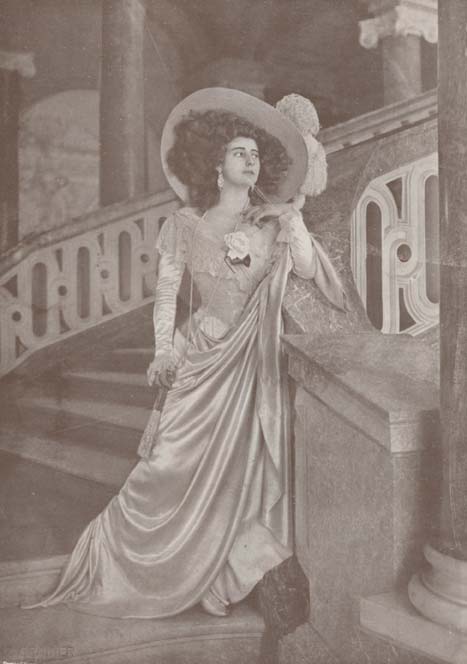
Rita Sacchetto da Duchessa di Devonshire secondo il ritratto di Thomas Gainsborough

La graziosa danzatrice è nata a Monaco da un pittore veneziano e da una musicista tedesca. La sua danza è mimica; è espressione e purezza e compostezza, è magistero e armonia di ritmi.

Non vuole che le sue danze si chiamino a tal modo, che indica, infine un esercizio non troppo vario e non troppo diverso. Preferisce che siano chiamate con vocaboli piu complessi e che, quindi, i suoi balli siano intesi come dei veri poemi psicologici in azione e poi anche poemi mimici o, addirittura, poesia senz’altro.

La sua maggiore ambizione è quella di dire, raffigurare tutto col gesto. Prima era pittrice e ama affermare che la luce le venne da Lenbach, suo maestro e suo direttore spirituale.

Ha detto che vorrebbe perciò esser chiamata interprete di musiche e di forme.

Dunque, oltre la poesia, anche la musica.

Infine, i gesto è tutto, pensa Rita Sacchetto con la convinzione con cui gli scrittori, i poeti dichiarano che il verbo è tutto. Dove la musica finisce, lì comincia il gesto e va oltre. Come si vede, Rita Sacchetto non ha limiti nelle sue aspirazioni estetiche ed artistiche e con la volubile, mutevole eleganza e plasticità delle sue movenze raggiunge effetti mirabili.

Giovinetta non ballava che per sè. Lenbach la vide dunque e le disse che quella era la sua vera inclinazione.

Fu invitata a ballare all’ Associazione artistica di Roma. Non accettò di eseguire una pantomima e rappresentando Dyemileh , incarnò cioè, secondo la sua fantasia, il suo capriccio e la sua intuizione, il mondo orientale. Il successo fu tale da spronarla a continuare ad aumentare il suo repertorio e si mise a viaggiare il mondo, sostando a tutte le corti, cogliendo dovunque per la sua arte le più strane impressioni.

Rita Sacchetto è ora ammiratissima in Italia, nelle figure così diverse di stile, di casta cui essa dà la loro fisionomia reale e spirituale con così sottile accorgimento e con percezione così caratteristica. Eppure, crede, solo di fare degli schizzi che preparano il gran quadro futuro, cioè il capolavoro perfetto che arriverà prima o dopo.

La danza di Rita Sacchetto è moderna nel miglior senso della parola; è ravvivata drammaticamente dall’intelligenza. Essa sa rendere a meraviglia in pari modo i tratti particolari, popolari di una nazione e i lineamenti delle grandi dame principesche e delle figure femminili storiche. Essa sparge intorno a sè il sentimento della luce, della libertà e della letizia. È in ispecie nelle sue interpretazioni musicali di un fascino squisito, singolare. In lei dunque la danza è veramente l’espressione di un mondo sentimentale inte- riore che anela a divenire, nella sua estrinsecazione, opera d’arte.

È un vero, raffinatissimo godimento mirare quale contenuto sa dare alla danza e quale potenza comunicativa esca in grazia e bellezza dai suoi gesti.

Milano, 1911