C’era una volta al Giardino Zoologico di Roma…

ghione100b“Nel mentre la Caesar imbastiva film su film con alacrità appassionata, la nostra Celio era stata trasferita al Giardino Zoologico (vi prego che non vi è alcuna intenzione offensiva per gli artisti) in locale dell’ex-esposizione, ed in quel piccolo stabilimento vi lavorava la Francesca Bertini, che aveva accettate le proposte della società Cines. Il Barone Blanc ne era il direttore generale ed ella fu diretta dal Conte Antamoro, ma in special modo dal povero Nino Oxilia, caduto da eroe al fronte, nei primo scontri. Oxilia fra le altre, diresse la film intitolata Sangue Bleu la quale fu, in verità, la prima interpretazione che rivelò la Bertini attrice di valore.”
Emilio Ghione

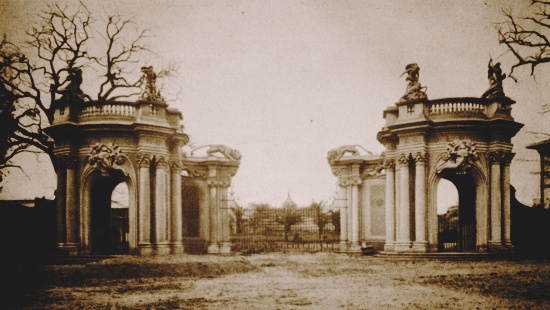
Roma, Giardino Zoologico 1911

Una breve visita al nuovo Stabilimento della Celio Film

Torino, febbraio 1914. Nella mia recente permanenza a Roma, volli fare una capatina al Giardino Zoologico, dove sta sorgendo il grandioso stabilimento della Celio e perciò pregai l’egregio avv. Mecheri, amministratore delegato della Società, di volermi accompagnare.

La mia visita fu breve, ma ho potuto constatare de visu, sebbene non ancora tutto sia in ordine, che questo nuovo stabilimento si presenta come il migliore di tutti quelli esistenti finora in Italia. Teatro grandissimo e magnifico, munito di tutti i moderni perfezionamenti; fabbricati immensi e lussuosi per uffici, magazzini, depositi, reparti tecnici, ecc; camerini per gli artisti e garages per automobili, sono raggruppati su di una spianata che domina tutto il vasto e ricco giardino, nel quale si possono eseguire le scene più svariate e ritrarre vedute superbe di Roma e dei suoi dintorni.

Nel grande fabbricato centrale, al pian terreno, sorge un bellissimo ristorante per il personale, disposto ed addobbato lussuosamente, così che chi non vuole o non può portarsi a casa, nelle ore di pranzo, trova sul posto ogni conforto desiderabile. Nel Giardino Zoologico, tutto a disposizione della Celio, vi sono laghetti, aiuole, viali, giardini, bosco, e tutto quanto potrà abbisognare perché le films eseguite sul posto abbiano quell’impronta di signorilità e ricchezza , alla quale la simpatica Casa ci ha abituati. Per dippiù tutti gli animali ivi esistenti, potranno servire per delle scene; è facile quindi prevedere che gioielli di lavori saranno ora imbastiti ed al più presto lanciati in commercio, tantoppiù che venne reclutato un personale direttivo ed artistico di prim’ordine, ed altri elementi vanno giornalmente ingaggiandosi per formare diverse troupes omogenee e compatte. Certo che l’egregio Avv. Mecheri si promette — e riuscirà certamente — di poter quanto prima disporre delle programmazioni settimanali: si è troppo bene disposta sul mercato mondiale, la marca, per non seguire il gusto del pubblico e dei cinematografisti tutti, che alla Celio-Film accordano il massimo favore. Questo è l’augurio che io faccio alla Celio-Film, che questi suoi propositi siano messi in atto al più presto e vengano coronati dal più lusinghiero dei successi.

Veritas

Il Monastero di Sandomir – 1922

Tore Svennberg, Il Monastero di Sandomir
Tore Svennberg (Il Monastero di Sandomir)

« Il Monastero di Sandomir, capolavoro cinematografico della Svenka di Stoccolma, messo in scena da Victor Sjostrom, interpretato dalla celebre attrice svedese Tora Teje. Altri interpreti Tore Svennberg e Richard Lund.

È la storia fosca di una nobile famiglia polacca distrutta dalla colpa d’una donna bellissima e simulatrice. Amore, tradimento, finzione, vendetta, si succedono attraverso il gioco serrato degli attori, che rappresentano i personaggi del dramma con verità umana e con tragica cupezza. L’espiazione mistica del marito, che atrocemente offeso nell’onore e negli affetti, s’era vendicato senza pietà, costituisce un episodio commoventissimo, pieno di significato spirituale e di bellezza scenografica. Il Monastero di Sandomir, sorto sulle rovine fumanti del Castello in cui fu consumato il terribile dramma, chiude nelle sue mura austere l’uomo che à offerta a Dio la sua triste vita spezzata, in olocausto del suo peccato di sangue. »
(dalla pubblicità del Sindacato per il Libero Commercio Cinematografico, Roma 1922)

« A dispetto dei costumi benelliani, Klostret i Sendomir (1919) è, in certo modo, l’opera più sperimentale di Sjöström. Quasi tutto girato in interni, il film, ambientato nel secolo decimottavo, si avvale di un’illuminazione fortemente effettata. Le linee sinuose della tragedia, cupamente evocata dal monaco (l’ex-castellano Starensky, uccisore della moglie Elga, bella e infedele), si intrecciano con quelle, ancor meno rettilinee, dello stile. È evidente che Sjöström, influenzato dalla messinscena espressionista, tenta una difficile meditazione tra il chiaroscuro di ascendenza fiamminga e la lezione di Munch. In pratica si va — come gusto — dalle illustrazioni per romanzi storici all’eclettismo del secondo Reinhardt. »
Francesco Savio
(La parola e il silenzio, il film scandinavo dalle origini al 1954, Mostra di Venezia 1964)

Lou Tellegen hate the word actor

Lou Tellegen in "Phèdre"
Lou Tellegen in “Phèdre”

New York, 1913. Bernhardt’s recent engagement in New York at the Palace Theatre was doubly interesting in serving to reintroduce to the American public a young Greek actor of unusual appeal and commanding presence.

Lou Tellegen is twenty-eight and be has already for two years been the leading man of the world’s greatest actress. He is, therefore, a somewhat extraordinary young man indeed, the youngest leading man she has ever had. Despite bis youth his work has a dignity, authority and repose that is impressive. In watching these artistes together there appears no great disparity in age or experience, but then, has there yet been discovered a spirit that is more youthful than that of Sarah Bernhardt ?

Tellegen’s father was a Greek general and his mother a Danish dancer. He was born in Athens and reared in Holland. He has been associated with the theatre nearly all his life, rather against his father’s wishes. He has travelled almost all over the world and has acted in Holland, France, England and America. He is, in fact, a man of the world by education and experience. At fourteen he ran away from home and for three years lived a nomadic life. He knew what it was —to be desolate to be without decent clothes — to be disagree ably hungry.

One dramatic moment in his youthful experience impresses one as graphic and significant. He was sixteen barefoot; he had no money, no place to go no shelter and it began to rain. The quick, sudden realization of all this was too overwhelming so he began to cry. He saw a house, but pride forbade from telling his plight. Seeing a tree he laid down under it and slept with the abandon of perfect youth. When he woke he walked to the next town, got work and in four hours was eating a meal that he had earned by the sweat of his brow. At that moment he says: “I realized what it was to be a man.”

Tellegen is a universal man; as one talks with him you realize that his biggest lessons he has learned from the stars and living out in the open. He loves life and speaks of his love for it with the naiveté of a child. Bernhardt be reveres. He speaks of her with an affectionate, admiring respect that is refreshing. He says: “My mother brought me into the world, but Madame Sarah is my real mother. She has given me my chance and has taught me everything. We really play together: it is not work to us and there is no audience ever. It is those moments that we are on the stage that we live and have our real being. I hate the word actor —I never want to act I want only to be !”

To see Tellegen on the stage is to be convinced that this is not a mere pose. Each of the characters he portrays is a creation and is etched individually with cameo-like clarity. Best of all he brings fresh thought to a character and often entirely disregards tradition. Oddly enough, his best work on the American stage has been the two extremes of classical and modern drama. Armand in Camille and Hyppolitus in Phèdre. In this latter rôle he is given, too, the opportunity to visualize a glorious picture of physical beauty.

His most radical departure from tradition is revealed in his portraiture of Scarpia in Tosca. Scarpia is usually presented as a burly brute, sensual, pugnacious, rather blatant and a little middle class. As a matter of fact, Scarpia was a patrician and Tellegen makes him so, and from this major note he works out his plan. He smiles a great deal and his smile is terrible. It is the smile of utter cruelty. There is no sun in this glancing light. It does not warm. It kills as it tortures Tosca. He has the gentleness of absolute control of the situation, he has the mildness of the finished job. He is subtlety and resiliency itself. His mentality hurts so you almost wish he’d do something crude, obvious and humanly stupid.

As Armand he is the ingenuous lover : a little gauche as a boy might be— a little dumb and awkward as a youth hopelessly in love ever is. His first entrance is perfect. You realize absolutely he is coming into the presence of his divinity —the one who embodies his grande passion.
A.R.