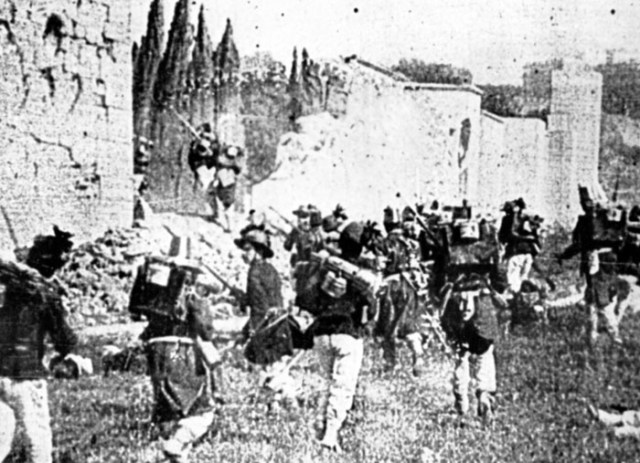
La Breccia di Porta Pia (La presa di Roma, Alberini e Santoni 1905)
Manifattura di pellicole per cinematografi. Si rende noto che in Roma, via Torino 96, fu impiantato dalla ditta Alberini e Santoni l’esercizio di una industria nuova per l’Italia, quella cioè della manifattura di soggetti o films cinematografici. Auguriamo alla medesima il migliore successo. (Bullettino della Società Fotografica di Firenze, ottobre 1905)
Roma, settembre 1933. Due giovani volenterosi, Filoteo Alberini e Dante Santoni si misero all’opera e nel settembre 1905 inaugurarono il Primo Stabilimento italiano di manifattura cinematografica. La costruzione sorgeva, come ancora la si vede oggi, a pochi metri fuori Porta San Giovanni, allora zona totalmente priva di palazzi. Sul fronte e dopo una cancellata sorgeva una elegante palazzina per uso di uffici, dalla quale, a tergo, si allungava una grande serra a vetri costituente propriamente la sala o teatro di posa ed infine un’altra palazzina per uso dei diversi rami di lavorazione: stampa dei positivi, montaggi, preparazione dei titoli, magazzini, vestiario, sartoria, attrezzeria, ecc. ecc. Nel sottosuolo vasti ambienti corredati di grandi vasche per lo sviluppo e lavaggio dei negativi e dei positivi. In complesso uno stabilimento fornito da tutto il necessario occorrente ad una continua e buona produzione.
Dopo l’avvenuta inaugurazione, annunziata e commentata benignamente dalla stampa romana, pervenne alla direzione, a mezzo di un Comitato, organizzato per celebrare il 35° anniversario dell’entrata degli italiani a Roma, la proposta di eseguire una cinematografia nella quale dovevano figurare, per sommi capi, le varie fasi che precedettero l’azione finale della Breccia di Porta Pia. La Direzione dello stabilimento aderì con slancio, e subito si mise all’opera.
Il Ministero della Guerra fu largo nella concessione di armi e vestiario. Molte fotografie del Tuminello, il quale, come è noto, era il fotografo che seguiva le truppe italiane, furono di base per gli scenari; ed una di queste al celebre scenografo Cicognani servì per ricostruire in modo magistrale il panorama della Breccia. Una scena dipinta su carta, intagliata convenientemente lunga circa cento metri e piazzata nell’attiguo terreno dello stabilimento. L’effetto dell’ultima cannonata che provocò la breccia, il passaggio dei valorosi bersaglieri guidati dall’eroico maggiore Pagliari e la sua immatura fine, formavano, si può dire, una azione realistica ed impressionante.
In pochi giorni la Presa di Roma fu ultimata. La sera del XX settembre 1905, questo primo lavoro cinematografico italiano fu sottoposto al giudizio del pubblico. Il successo fu veramente clamoroso e la proiezione del film si dovette ripetere molte volte per dar soddisfazione alla fiumana del pubblico che fin dalle prime ore di notte seguitava ad affluire nella storica piazza. Il successivo 21 settembre, contemporaneamente ai cinematografi di Roma anche le altre città italiane fu proiettata e tenne il cartello per molte settimane consecutive. Ancora fino a qualche anno fa, in occasione di quella ricorrenza, molti cinematografi d’Italia ripresentavano la fortunata pellicola.
Si gira nella “Valle della Morte” (grazie Media History Digital Library!)
« Sono convinto di aver fatto un solo film in vita mia e nessuno l’ha mai visto. I poveri resti di questa mia opera, mutilati e sfigurati, furono presentati con il titolo di Greed.»
Erich von Stroheim
Nella storia della letteratura americana Frank Norris è ricordato per la sua trilogia naturalistico-sociale (The Octopus, The Pit e The Wolf), per il fatto che aveva vissuto a Parigi, nel Quartier Latin, che aveva studiato a Harvard, o magari per le sue corrispondenza dall’Africa del Sud al tempo della guerra anglo-boera. Meno vi si parla, in genere, del suo romanzo McTeague: A Story of San Francisco (1899). Per esempio, Ralph Philip Boas e Katherine Burton, professori al Wheaton College, nel loro Social Backgrounds of American Literature (Little, Brown, and company, 1933), addirittura lo trascurano, considerandolo un’opera giovanile. Eppure, è difficile far distinzioni nell’opera di un romanziere morto a trentadue anni. E proprio da McTeague che Erich von Stroheim, uno dei maggiori registi dell’era del muto, prese le mosse per il suo Greed (1923-24). Frank Norris era uno scrittore naturalista, della generazione di Jack London ma, privo di slanci filosofici e utopistici, si accaniva a descrivere “ante litteram”, quell’America amara che più tardi scrittori assai meno importanti di lui, avrebbero divulgato. Un mondo duro e tetro, di passioni, di sangue, di avidità, di rapacità, appunto; tale era il mondo americano descritto nel romanzo del giovane Norris. Altrettanto attaccato alla realtà, feroce e caustico era, in quegli anni, Erich von Stroheim.
Secondo Peter Noble in Fuggiasco da Hollywood (Il Saggiatore, 1950), Stroheim, pardon, von Stroheim, che aveva letto il romanzo di Norris mentre lavorava come generico (e non solo) per D. W. Griffith, fu subito colpito dalle eccezionali possibilità cinematografiche che offriva la storia:
« È possibile narrare una grande vicenda tramite le immagini, in modo tale che lo spettatore abbia la sensazione di trovarsi di fronte alla realtà. Dickens e Maupassant, Zola e Frank Norris hanno saputo cogliere e riprodurre la vita nei loro romanzi: è necessario quindi portare sugli schermi un uguale realismo. In tutta modestia mi propongo di fare qualcosa del genere e di riuscirvi almeno in parte, ed è con questo scopo che sto realizzando un film tratto dal romanzo McTeague di Frank Norris. »
Un gruppo dei suoi collaboratori aveva lasciato la Universal passando con lui alla Goldwyn: Eddie Sowders e Louis Germonprez (aiuto-registi); Ben Reynolds e William Daniels (operatori); e il capitano-scenografo Richard Day.
A Stroheim non piacevano i divi (verrà duramente punito per questo, prima da Mae Murray e poi da Gloria Swanson): era lui che creava i divi, non considerando indispensabili i bei volti per il successo di un film, e nel caso di Zasu Pitts, che aveva recitato diverse parti in commedie sentimentali, prima di essere scelta per interpretare la parte altamente drammatica di Trina in Greed affermava:
« Zasu Pitts è bella, più bella delle celebri bellezze dello schermo. Ha più sex appeal di qualsiasi altra donna del cinema, è la più grande attrice cinematografica e una delle poche attrici tragiche. Non avete mai veduto Zasu Pitts sullo schermo come l’ho veduta io. »
Per la parte di McTeague aveva scelto l’attore inglese Gibson Gowland, che aveva sostenuto la parte della guida alpina in Blind Husbands, benché non fosse per nulla una celebrità, o forse giusto perché non era una celebrità. Per interpretare la parte del rivale Marcus Schouler scelse l’attore di origine danese Jean Hersholt, che non conosceva di persona:
« Io recitavo con Mae Murray quando venni informato che Stroheim voleva affidarmi la parte di Marcus Schouler in Greed. Avevo già letto il romanzo e sapevo che era per me una grande occasione; firmai su due piedi un contratto con Goldwyn per 250 dollari alla settimana. Nel febbraio 1923 Stroheim tornò a Hollywood con la sceneggiatura pronta, i contratti con gli attori firmati, e deciso a iniziare subito il lavoro.
Non dimenticherò mai la prima volta che vidi Von. Avevo appena oltrepassato i cancelli dello studio di Culver City, quando lo vidi arrivare nella sua immensa automobile, guidata da un autista in livrea. Insieme a lui c’era Eddie Sowders, che già conoscevo. Appena Stroheim scese dalla macchina, Eddie venne verso di me e mi strinse la mano. Quindi si volse verso il suo capo (massiccio, eretto, vestito accuratamente, i capelli rasati alla tedesca e una sigaretta infilata in un lungo bocchino):
— Forse non conoscete Jean Hersholt, col quale avete firmato un contrato per la parte di Marcus Schouler… — gli disse Eddie Sowders.
Stroheim si tolse il bocchino dalla labbra, mi guardo fisso, e con voce gutturale rispose:
— Sareste voi Jean Hersholt? Non siete assolutamente il tipo che volevo!
Lo guardai sbalordito. Eddie sembrava piuttosto a disagio quando Stroheim si rivolse a lui:
— Il signor Herstolt ha già firmato il contratto?
Eddie assicurò che tanto la mia firma quanto la firma della casa produttrice erano già sul foglio.
— Venite nel mio ufficio — disse il regista — forse potrò trovarvi un’altra parte.
Lo seguii ed egli sprofondò in poltrona continuando a fissarmi.
— Voi non siete Marcus Schouler, — continuò — il vostro sguardo è troppo mite.
Affermai che potevo far diventare il mio sguardo feroce quando volevo, e gli ricordai che anche i suoi occhi erano buoni, ma che in Hearts of the World, Foolish Wives e in altri film, aveva recitato parti da cattivo con molto successo.
— Ma Schouler è il custode di un canile, — proseguì lui — è un tipo leccato e impomatato, con un abito vistoso, una bombetta in testa, e un sigaro perennemente in bocca. Avete anche una pettinatura sbagliata. Egli ha il collo rasato e i capelli lisciati con la brillantina. Mi dispiace, ma forse potremo trovarvi qualche altra cosa da fare…
Tornai a casa terribilmente abbattuto, ma l’indomani andai da Zan’s a Los Angeles e vi passai molte ore. Lavorò su di me uno dei migliori truccatori degli Stati Uniti. Mi fece radere i baffi e tagliare i capelli come voleva Stroheim. Indossai un abito a scacchi molto chiassoso, i capelli erano pettinati in modo diverso, e la mia personalità era completamente cambiata. L’indomani, stringendo fra i denti un sigaro da poco prezzo, mi presentai nell’ufficio di Stroheim.
Mi guardò fisso e, sul momento, non poté credere che fossi lo stesso attore. Finalmente batté i talloni e fece un inchino:
— Vi chiedo scusa, signor Hersholt — disse con dignità tutta austriaca — Voi siete Marcus Schouler. Ne sono felice: e mi dispiace solo di non averlo capito prima.
Si girano le ultime scene al Death Valley (grazie Media History Digital Library!)
Non so quanto sia venuto a costare Greed, ma lavorammo in continuazione per nove mesi. Stroheim passò altri sei mesi a montare il film di trenta bobine (di cui nessuna era stata girata in uno studio), poi ridusse il montaggio a venti bobine e rifiutò ulteriori tagli. In seguitò però la pellicola passò in sala di montaggio, e si salvarono soltanto dieci bobine.
Per sette mesi ci stabilimmo al Fairmont Hotel di San Francisco senza tornare a casa neanche una volta, e per altri due mesi lavorammo nella Valle della Morte (Death Valley). Su quarantun persone, se ne ammalarono quattordici e le dovemmo mandare a casa. Quando il film fu terminato pesavo dieci chili di meno ed ero in ospedale con la febbre alta.
Girammo le scene che dovevano svolgersi a San Francisco nei luoghi descritti da Frank Norris. Era la storia di un orrendo assassinio realmente avvenuto. Prendemmo in affitto la casa dove era stato commesso l’omicidio, e vi girammo parte del film; poi ebbe inizio la più terribile esperienza che avessimo mai passato, quella delle riprese a Death Valley. La carovana si componeva di sette autocarri, con me, Gibson Gowland e quarantun tecnici. Durante le due settimane in cui rimanemmo nella zona più impervia della valle, la temperatura si aggirò fra 50 e 32 gradi. L’aria rovente dissecava i nostri poveri corpi e non ci lasciava dormire; dopo pochi giorni di lavorazione nessuno di noi parlava, a meno che non lo dovesse fare per lavoro. Faceva così caldo che bastava rompere un uovo in una padella perché cuocesse immediatamente. »
Basta così. Il resto, molto interessante, lo potete leggere nel libro di Peter Noble.
Vorrei segnalare che di questo film, mai uscito in Italia, esiste una versione disponibile in DVD (versione spagnola: Avaricia), la versione di iTunes, che è con sicurezza la versione restaurata presentata al Telluride Film Festival 1999 non è disponibile in Europa. Nessuna è, naturalmente, la versione director’s cut voluta da Stroheim, che risulta definitivamente scomparsa (posso dirlo?) ma è già molto.
(fra gli interpreti c’è uno degli attori favoriti di Stroheim: l’italiano Cesare Gravina, del quale ritornerò a parlare a breve)
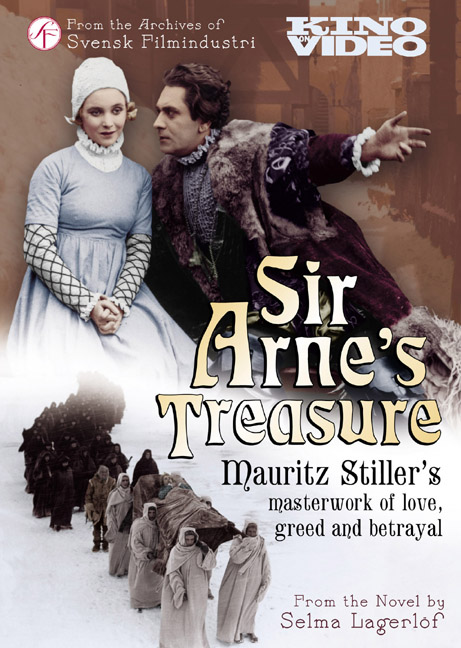
Faceva un gran freddo in quell’inizio di primavera del 1921, quando le due stelle del cinema muto Mary Johnson (nella parte di Elsalill) e Richard Lund (in quella di Sir Archie), assieme agli altri protagonisti, furono inviati da Stiller a Furusund, alla periferia di Stoccolma.
Dopo una lunga attesa il regista era riuscito ad ottenere che la magnifica goletta che formava il suggestivo sfondo del film fosse bloccata dai ghiacci di Blidö. Quivi il grande e strano scafo giaceva in un grigio turbinare di neve, poiché Stiller aveva anche trovato condizioni climatiche ideali, il che, nella fattispecie, equivaleva ad una rigida e violenta bufera di neve. C’è ancora gente nelle isole vicine che ricorda il giorno in cui fu girata la scena della processione funebre. Era stato diramato un appello urgente per avere molte comparse, ed all’alba vecchi e giovani vennero incerti sul ghiaccio; alcuni rimorchiavano delle barche per attraversare i canali d’acqua fra le lastre di ghiaccio.
Ci volle molta pazienza prima che ognuno fosse in possesso del proprio costume: un vestito a lutto con un uncino. Mentre veniva formato il corteo ed erano consegnate le torce accese, le mani degli operatori si facevano fredde e rigide, mentre Stiller diventava sempre più impaziente nel suo lungo e liso cappotto di pelliccia. Finalmente Mary Johnson fu messa nella bara col suo leggero vestito grigio con bavero bianco, e, prima che Stiller si dichiarasse soddisfatto delle scene, l’attrice fu portata avanti ed indietro per ore, sotto la tormenta di neve che infuriava. Un sacrificio coraggioso da parte della giovane attrice, che era sorretta ed incitata da un grande regista.
Stiller era esigentissimo; una specie di demone con un carattere estremamente eccitabile ed una volontà d’acciaio. Egli otteneva sempre tutto dai suoi attori. Coloro che lavoravano con lui, tuttavia, non badavano ai suoi modi tirannici, perché sapevano che, se egli urlava, non era per cattiveria, ma per lo stimolo ed il desiderio di creare un’opera d’arte. E opera d’arte fu appunto Herr Arnes Penningar, un film che dette fama mondiale sia a Stiller sia alla cinematografia svedese.
La parte più suggestiva dell’opera è quella costituita dalle scene finali, a cominciare dalla processione funebre con quelle file di figure nere e grigie che recano sulle spalle la pesante bara e che si stagliano contro il bianco della neve. Stiller compose i suoi film col gusto di un pittore, e i mercati, i pranzi, e i gruppi di marinai, pescatori e soldati da lui ritratti, furono vere e proprie composizioni ad effetto. La dignità e la serietà che egli impresse sui volti del sacerdote, del comandante della nave, della moglie del pescatore e della folla che partecipava alla processione, furono cose davvero stupende.