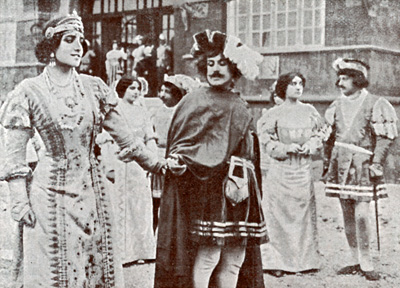
Una scena di Cesare Borgia, Film d’Arte Italiana 1912
Dramma in due atti e 35 quadri.
Interpreti: Giovanni Pezzinga (Cesare Borgia); Vittorio Pianelli (Alessandro VI; Ubaldo Pittei (Giovanni Borgia); Maria Jacobini (Sanzia)
Pathécolor – 690 metri circa.
Fra gli interpreti, definitivamente, c’è Francesca Bertini, terza da sinistra a destra, in secondo piano. La prima a sinistra è Maria Jacobini che debuttava sullo schermo con questo film. (n.d.c.)
Cesare Borgia, il bastardo temuto e amato da Papa Alessandro VI, l’amico di Luigi VII, l’implacabile rivale di Giuliano della Rovere, che fu poi il grande Pontefice Giulio II, è una delle più tristi e famigerate figure di quella nefasta era borgiana, che la storia ha segnata con indelebile marchio d’infamia.
La ricostruzione cinematografica di quel mondo di intrighi, d’insidie, di stragi, era possibile fosse eseguita solamente in Roma, ove i musei, le pinacoteche, le mura merlate, la Mole Adriana e gli angoli dell’antica metropoli parlano ancora di quei nefasti giorni che disonorarono tutta un’epoca, pure tanto ricca di valore e di eroismo.
La Film d’Arte Italiana, con la scorta di documenti autentici e rari, seguendo le orme di quella scia di sangue che arrossò il memore Tevere, ci ha donato un lavoro veramente degno ed imperituro, che arricchisce il Consorzio Pathé di un altro capolavoro di carattere storico.
Intorno ad un episodio di amore e di morte sono raggruppati i principali personaggi che resero lieta e triste la vita di Alessandro VI, il Duca di Candia, Giovanni, la sua bella ed appassionata Sanzia, Cesare, duca di Valentino, i quali, in un’azione vigorosa e complessa, fanno rivivere quel tragico fratricidio, che pel suo cinismo e la sua efferatezza commosse il mondo intero.
(…)
La fedeltà dei costumi e dei luoghi con i quali e dove realmente si svolse l’azione nei sanguigni tramonti del secolo XV, sono magistralmente trattati dal Pathecolor, che accresce verità e vita alla scena di per se stessa tanto sensazionale e le dona uno squisito sapore di arte che la innalza al patos eschileo.
Grazie agli ottimi artisti ed all’accurata interpretazione, senza titubanze e senza contrasti, Cesare Borgia ci appare una delle più attraenti novità di quest’aureo periodo della Film d’Arte Italiana.
La storia del cinema muto raccontata da chi l’ha vissuta. Il primo incontro col cinema di Victor Sjöstrom.
Victor Sjöstrom in Vampyren 1912
In che modo ho incominciato a fare del cinema? E’ accaduto cosi.
Einar Fröberg ed io avevamo una compagnia di prosa e ci trovavamo a Malmoe, dove mettevo in scena Sogno di una notte di mezza estate di Shakespeare.
Una sera suonò il telefono: era il mio vecchio compagno di scuola Kaifas, al secolo redattore Erik Ljungberg, che allora si interessava di cinema. Il soggetto del Regina von Emmeritz per Charles Magnusson della Svenska Biografteatern di Kristianstad era opera sua.
Mi chiedeva se mi sarebbe piaciuto fare del cinema. Certo che mi sarebbe piaciuto. Ero curioso della nuova forma d’arte, e convinto delle sue possibilità. Avevo visto una volta, in un film americano, una scena che mi aveva fortemente impressionato. La ricordo ancora chiaramente: un giovane stava all’incudine battendo il ferro. La moglie l’aveva abbandonato ed egli non l’aveva più vista da tanti anni. Quando lei compariva improvvisamente nell’officina egli nell’alzare gli occhi dal lavoro incontrava lo sguardo della moglie. Fu proprio quello sguardo a convincermi delle possibilità del cinema: la faccia del fabbro era illuminata dal basso, cosa che non sarebbe mai stata realizzata in teatro, pensavo.
Ero curioso dell’arte cinematografica, curioso del come si facevano i film. Inoltre avevo sentito dire che la vita era allegra e piacevole negli ambienti cinematografici di Kristianstad. Non vi si lesinava: perché non avrei dovuto avere anch’io la mia fetta di torta? Però avevo un accordo con Einar Fröberg: avevamo scritturato degli attori e firmato qualche contratto d’affitto di teatri per la successiva stagione. Infine mi decisi a rimettere la soluzione a lui stesso e una mattina s’incontrarono in conferenza plenaria Fröberg, Magnusson e Jens Edward Kock, in una stanza tetra dell’Hotel Kramer. Mi sembra di ricordare che fosse nel febbraio 1912. Fröberg si interessava per conto mio del contratto. Decisero che dovevo debuttare in cinema nell’estate: avrei incominciato in maggio per poi tornare al teatro in inverno. Lo stipendio era principesco: 15.000 corone, somma che — detto fra parentesi — veniva inghiottita dalla voragine del teatro. Il cinema doveva aiutare il teatro.
Era mia abitudine ogni primavera, al termine della stagione teatrale, in maggio, recarmi a Londra ad assistere agli spettacoli che vi si davano e così feci anche quell’anno. Ma a Parigi mi raggiunsero Magnusson ed il rappresentante della Pathé, Popert, i quali pretendevano che studiassi il cinema con loro. Certo mi sarebbe stato utile guardarmi un po’ attorno nella capitale mondiale del cinema d’allora. E così visitammo gli studi della Pathé, allora di fama internazionale, dove fummo ricevuti molto gentilmente perché la Svenska Biografen aveva cominciato a collaborare con la società francese che presentava i suoi film in Svezia. Gli studi non erano un gran che, però molto più spaziosi e belli di quelli che avevamo allora in Svezia. Mi ricordo d’avere visto una sequenza con Mistinguett: il comico Lehmann entrava con un mazzo di fiori ed inciampava davanti alle famose gambe della diva. Era, naturalmente, molto buffo, ma io mi interessavo di più all’attrezzatura dello studio: gironzolavo copiando furtivamente le decorazioni e la loro posizione.
Ritornati a Stoccolma si cominciò a girare. La Svenska Biografteatern si era trasferita dai suoi studi di Kristianstad ai nuovi studi di Lidingö. Alcuni film, realizzati già a metà a Kristianstad, dovevano essere ultimati e ne dovevano essere iniziati altri con nuovi elementi.
Mauritz Stiller era già al lavoro. Allora lo conoscevo appena, essendogli stato presentato casualmente una volta. In teatro Stiller aveva recitato in Pastor Jussilainen e Bakrom Kuopio del finlandese Gustaf von Numers e il suo primo lavoro alla Svenska Bio fu una fusione di queste due opere. In quel periodo Stiller scriveva parecchi soggetti e nel film tratto dai lavori di Numers che era quasi ultimato quando arrivai io Stiller figurava come attore. Oltre questo film alla Svenska Bio ne stavano pure girando un paio con Anna Norrie.
Il mio primo lavoro lo ebbi nel capolavoro di Stiller Vampyren (1912) su soggetto scritto da lui stesso. Ero sbalordito dal fatto che un regista dovesse anche scrivere da se stesso i soggetti. Era un problema che mi dava grandi preoccupazioni. Ero abituato al teatro, dove il lavoro del regista e degli attori consisteva nel rappresentare, interpretandola, l’opera dell’autore. Ogni tanto ci si poteva permettere di cancellare qualche scena o qualche battuta, ma l’aggiungere un solo rigo era considerato un delitto, tanta era la stima che si aveva per gli scrittori. Ma qui si doveva essere scrittori per i propri film.
Vampyren cominciò ad ogni modo coll’esser proibito dalla censura. Poco dopo diressi il mio primo film Världens grymhet (1912, trad. lett. La crudeltà del mondo) ovvero Trädgardmästaren (trad. lett. Il giardiniere), nel quale impersonavo una figura di seduttore. Lilly Beck era la sedotta e la scena della seduzione si svolgeva in una serra, dove Lilly Beck moriva in bellezza circondata dalle rose e dai vasi spezzati.
Terribilmente bello e pieno di sentimento: ma il film fu proibito dalla censura.
Fra i partecipanti si notava un robusto ragazzo che si chiamava Gösta Ekman (diventato poi uno dei migliori registi svedesi).
Fui più fortunato con De svaria maskerna (1912, trad. lett. La maschera nera) il “clou” della stagione. Il soggetto era di Magnusson e Stiller, e Stiller ne fu anche il regista. Io avevo la parte del protagonista, un tipo che possedeva dei documenti importanti dei quali una banda nemica voleva impossessarsi. La banda decideva di farmi sedurre, il che riusciva benissimo anche se avevo già una fanciulla del cuore, che faceva la ballerina sulla corda. La seduttrice, Lilly Beck veniva poi mandata al fuoco, mentre io catturato, ero segregato nella soffitta di una casa alta sei piani. Ma l’amore della ballerina sulla corda, Gunnel Holzhausen, era cosi grande da spingerla ad affittare una stanza nella casa di fronte alla mia prigione, dalla quale mi buttava una corda che io fissavo: poi, reggendosi in equilibrio, arrivava fino a me e mi faceva fuggire. Ma la seduttrice ci vedeva mentre ci allontanavamo traballando sulla corda e piena di rabbia dava fuoco alla corda che si spezzava. Noi precipitavamo giù vertiginosamente, come Tarzan aggrappato ad una liana e malgrado il salto e l’ondeggiamento pauroso, venivamo salvati. Lieto fine.
Gunnel Holzhausen e Victor Sjöstrom in equilibrio sulla corda, mentre lavorano al film De svarta maskerna 1912
La scena sembrava molto reale perché allora non si usavano inquadrature riprese da vicino. La scena fu fotografata in due tempi. La corda era tesa sopra un tetto non molto alto e parallelamente ad essa correvano, invisibili, due fili di ferro ai quali ci sostenevamo: il fotografo Julius Jaenzon prendeva le foto da sotto in su, verso il cielo chiaro. Poi venne fotografata la casa a sei piani da sola, vista dalla strada, con una pellicola speciale: indi i due negativi vennero sviluppati insieme. Il nostro equilibrio, alla proiezione, sembrava in grave pericolo. Sul tetto sotto la corda c’era una carriola e durante una ripresa Magnusson ordinò : « Portate via la carriola e metteteci invece una coperta » per il caso che fossimo caduti.
Dapprima non s’aveva molta stima per la nobile arte del cinema: era impossibile averne. Come sarebbe stato possibile stimarla quando, ad esempio, a Gunnel Holzausen e me, che recitavamo in un teatro di Hälsingborg, arrivava improvvisamente un dispaccio che diceva: « La scena finale del film De svarta maskerna deve essere rifatta. I russi esigono un finale triste ».
Il film si proiettava già in molte parti del mondo e doveva essere immesso sul mercato russo, ma là non apprezzavano il salvataggio finale malgrado l’incendio della corda: dovevamo precipitare a terra e morire. Non ci restava quindi che partire per Stoccolma e stenderci a terra in una pozza di sangue.
Le riprese alla Svenska Bio si svolgevano sempre in un clima di allegria: ad esempio in En sommarsaga (1912, trad. lett. La saga di un’estate) alla quale partecipavano Hilda Borgström e Axel Ringvall, Victor Lundberg girava in mutandoni penzolanti fino alla caviglia.
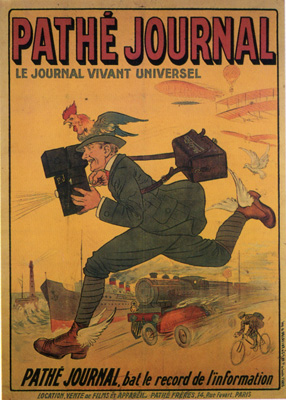
Manifesto Pathé Journal – Le Journal Vivant Universel
La cinematografia italiana occupa ormai posto di primo ordine nel campo internazionale per bontà tecnica e concettiva, ma tralascia in diverse occasioni di emulare quello spirito d’iniziativa che anima le migliori e più note Ditte estere e specialmente francesi.
La cinematografia francese sfrutta tutto il campo d’azione amplissimo che invade la nobilissima arte nuova ma già carica d’attori.
E così essa oltre alla riproduzione di vita vissuta familiare o sociale nelle sue multiformi manifestazioni di virtù e di vizio, di slanci eroici e di brutali malvage o matte bestiali aberrazioni della psiche o del senso; oltre alla parodia dei tipi eccentrici che nella società odierna maggiormente si rintracciano; oltre alla visione dei siti incantevoli dei due mondi; oltre alle didattiche proiezioni zoologiche, offre altresì la visione a volo d’uccello della cronistoria contemporanea.
La cinematografia deve veder tutto coi suoi cento occhi d’Argo e percorrendo con ali velocissime nazioni le più differenti o le più affini per tendenza di popoli e di manifestazioni sociali e politiche, civili o militari coglierle sulle sue cento retine nei momenti più tipici; essa deve tutto raccogliere di gioia e di sventure e mirare l’opera devastatrice della natura e quella riparatrice dell’uomo, ed il tutto esporre allo spettatore di ogni più piccolo centro del mondo perchè ovunque oggi essa regna in una proiezione che equivalga ad un giornale illustrato ed animato.
Tale programma ebbero le Case francesi istituendo la rubrica cinematografica Giornale e nei limiti del possibile, perchè di certo non è dato prevedere tutti gli avvenimenti, nè è sempre concesso dal caso di trovarsi spettatori, esso è dalle migliori Ditte quali Pathé e Gaumont ed altre col loro Journal eccellentemente eseguito.
Ed in tal modo il cittadino della Neva mentre rivede sulla bianca tela la rivista passata dallo Czar ai Cosacchi del Don, dopo un istante osserva la sfilata degli Ascari in Roma Capitale, ed un istante dopo l’estinzione di un colossale incendio a New York ed ancora dopo l’imbarco di un imperatore e così ancora i funerali delle vittime del dovere a Parigi.
Rivista settimanale cronistorica
Non sarebbe questo il titolo per rubrica se le Case italiane quali l’Ambrosio, la Cines, la Pasquali, l’Itala, la Milano, queste primissime delle nostre si risolvessero a non lasciare alle Ditte estere la privativa di tale importantissima attività?
O che forse le nostre Ditte non si sono valorosamente affermate per abilità tecnica e spirito d’intuizione? O che forse difettiamo ad esse energie attivissime od il fattore economico quando di continuo dimostrano esuberanza di attività e come ogni sacrificio, di poi ampliamente e giustamente ricompensato, si sobbarchino perchè l’opera loro sorga pregevole?
Noi vivamente invitiamo le Ditte italiane ad iniziare senz’altro la rubrica Rivista poichè nulla ad esse manca, anzi tutti i coefficienti posseggono ad iniziare non solo i lavori in cui già altri eccellono, bensì qualsiasi nuova attività possa ancora comparire all’orizzonte cinematografico.


 sempre in penombra