Again I find pleasant occasion to quote from the New York World- this time from the evening edition. From a leading editorial entitled “Posing for Posterity” I select the following excellent extracts:
Moving Pictures of the burial of the battleship Maine, which took place March 16 th, have arrives in this city and are being shown to the public. Wonderful vividness the Moving Pictures promises to lend to History! The preservation of films of special public interest begins to be already a metter for the Government to consider. There is n reason why our grandchildren and great-grandchildren a hundred years hence should not see faithful reproductions of Mr. Taft signing the Statehood Bill for Arizona and New Mexico, the Durbar of King George V, and even more important events. What would we not give to-day for a Moving Picture of the signing of the Declaration of Independence? Or of Washington taking leave of is officers? Or Lincoln at Gettysburg? Is it not, after all, our duty carefully to record and preserve as archives such Moving Pictures of contemporary scenes and public persons as may have first-rate interest to posterity? Will not cities, libraries and schools all over the world desire such records?
And this prompts the question: What are we doing to preserve all these historically important film that are being made every day? If the manufacturers do not get together and preserve these prints and the negatives, the preservation of these films will become a public charge.
The Photoplay Philosopher (The Motion Picture Story Magazine, August 1912)
L’ondine de cinéma est généralement une belle fille, aux contours suggestifs, dont les formes voluptueuses et académiques sont agréablement dessinées par un maillot collant.
Vous la voyez nager entre deux eaux, faire des plongées et des culbutes que ne désavouerait pas un phoque. Pourtant, elle n’a rien d’amphibie, mais elle peut, à l’écran, séjourner dans l’eau sans que le noir de ses jolis jeux se déteigne, sans que ses lèvres carminées se décolorent, sans que les ondes de ses cheveux plaquent en mèches rigides, sans que la poudre de riz qui donne à son teint une blancheur d’albâtre coule le long de ses joues en rigoles désastreuses… Elle peut évoluer dans tout l’éclat de sa beauté plastique. Mieux! Elle n’est pas obligée de se faire mouiller!
Quel est donc ce prodige?
Croyez-vous, cher lecteur, que pour produire ce miracle, il soit nécessaire d’avoir, comme la célèbre plongeuse du music-hall, tout un matériel fort coûteux, une grande piscine entourée de glaces? Non, il faudrait une puissance de lumière trop intense, et quand même, la photo manquerait de netteté.
Il existe un procédé beaucoup plus simple, que pas mal d’opérateurs et de metteurs en scène ignorent encore et que je vais vous dévoiler. Ce procédé, peu coûteux, exige une certaine minutie, et l’ingéniosité de l’exécutant aidera à en assurer le succès.
(…)
On a souvent recours aux conseils d’un professionnel, seulement connu des cinégraphistes pour un technicien de premier ordre: j’ai nommé le sympathique Caussade, bibliothécaire à Pathé Consortium, c’est généralement lui qui indique les trucs, avec la manière de s’en servir…
Mais revenons à notre baigneuse.
Voyons comment il faut procéder pour réaliser cette scène.
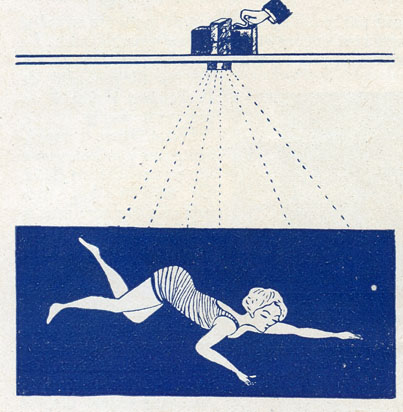
L’appareil de prise de vues est placé sur un bâti surplombant le sol, l’objectif braqué sur l’ondine qui évolue en tous sens, faisant le simulacre de nages, sur un tapis de velours noir étendu sur le sol. (Figure 1)
Figure 1. Truquage pour obtenir l’illusion de la nage antre deux eaux.
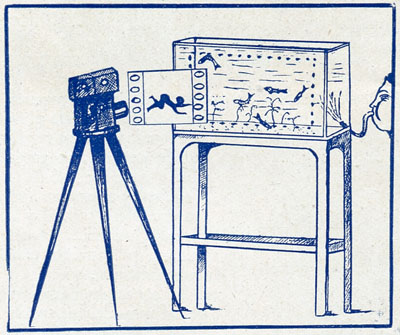
Son équilibre se rétablira de lui-même sur l’écran. Pour donner au public l’illusion que notre nageuse se meut dans l’élément liquide, le négatif sera sur-impressionné, selon la disposition du schéma de notre Figure 2.
Figure 2. Surimpression du Négatif.
On placera l’appareil de prise de vues en face d’un petit aquarium rempli d’eau où nagent de tout petits poissons qui, à la reproduction seront considérablement grossis. L’objectif sera braqué sur l’aquarium de façon à ne pas dépasser les bords indiqués dans notre schéma par un petit pointillé. On aura le soin de placer un tube en caoutchouc au fond de l’aquarium dans lequel on soufflera pour faire des bulles… c’est-à-dire agiter l’eau et donner l’idée d’ondes tumultueuses.
Après développement et tirage du positif, on obtiendra l’ondine de la figure 3. Quand elle sort de l’eau, l’opérateur tourne de nouveau en plein air (ou plutôt en pleine eau).
Figure 3. Schéma du positif obtenu par les opérations précédentes.
Z. Rollini (Les ondines au cinéma – Dans le champ de l’Opérateur ou les trucs dévoilés; Cinémagazine, 29 Juillet 1921)
«Alcun scenario sarà mai più bello e più drammatico della mia vera esistenza. Alcuna vita vi dirà di più dei costumi di Hollywood ove la dissolutezza più sfacciata e la più ipocrita pudibonderia si cozzano in strano contrasto.»
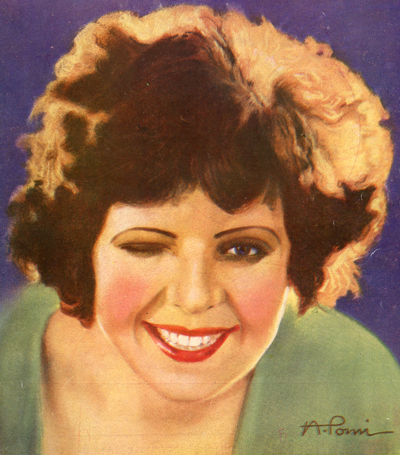
Fu nel 1908 che Clara Bow ebbe il primo successo: fece udire la sua voce e fu subito portata in trionfo. Era nata…. da dieci minuti! A dir la verità, i due unici spettatori che assistevano al suo debutto sul palcoscenico della vita erano suo padre e sua madre e forse…. peccavano di parzialità. Questo accadeva esattamente il 29 luglio del 1908 a Brooklyn:
Ero una ragazzina di Brooklyn allevata nella strada, fra i monelli, dividendo con essi i giochi e le botte, ma tutta presa da uno strano sogno di gloria e di fortuna… Mio padre, Robert Bow, era garzone di ristorante. Egli non viveva che per mia madre, povero essere malato e nevrastenico. E per questa sua figliola su cui aveva fondate non so quali grandi speranze… A quindici anni non conoscevo che la tristezza di un miserabile tugurio: ma guardavo sempre lontano, in alto, spinta a queste visioni da mio padre che mi adorava. Fu nel 1921. Un grande giornale di New York aprì un concorso di fotogenia. Mio padre, radunando le sue poche economie, mi condusse in uno dei più celebri e cari fotografi di Brooklyn. Poi, attendemmo. E un giorno fui convocata.
Vinse allora il primo premio in un concorso di bellezza, nel premio era incluso un provino per lo schermo, che le procurò subito una parte nel film starring Billie Dove: Beyond the Rainbow, ma disgraziatamente la sua parte fu tagliata:
Quale non fu la mia tristezza quando la pellicola giunse a New York (avevo convocato tutti gli amici, e mio padre tremava d’emozione) e vidi che tutte, capite? Tutte le scene ove io avrei dovuto comparire erano state tagliate! Mia madre, che già lo squilibrio mentale rendeva quasi pazza, m’accolse a legnate, e mi proibì di continuare la mia vita “scandalosa”. Promisi: e pochi giorni dopo, sul suo letto di morte, mi fece giurare che non avrei mai più fatto del cinematografo. Così diventai telefonista in una clinica medica, e tale sarei ancora, forse, se mio padre non fosse riuscito a farmi capire la nullità di un giuramento strappato da una povera creatura pazza e morente. E, allora, ritentati la prova.
Il regista Elmer Cliffon, cercando un tipo caratteristico per il film Down to the Sea in Ships, si ricordò di aver visto il ritratto di Clara Bow sulla copertina di un giornale di mode e di averla trovata molto fotogenica e molto simpatica. Questa volta Clara ebbe la “sua parte”, niente tagli, niente sorprese.
Clara Bow si avviò così verso la fortuna. Una lunga serie di films le procurarono moltissimi successi. Ma la pellicola che le diede fama internazionale fu It di Elinor Glynn. Allora « l’indiavolata dai capelli rossi » cominciò a far parlare di sé il mondo intero. Sulla sua vita privata furono raccontate innumerevoli storie scandalose, ma non per questo ella perdette la sua costante allegria ed il suo smagliante sorriso:
Vissi intensamente il bel sogno divenuto realtà. Quanto guadagnai? Non so: l’oro correva per le mie mani come una fonte inesauribile. Un giorno Donald Keith mi strappò una promessa di matrimonio: io mi accorsi subito dell’errore e mi sposai di corsa con Gilbert Roland. Ma anche di lui mi stancai presto. E fu la volta di Victor Fleming. Il pubblico si divertiva delle mie incongruenze, io… ancora più del pubblico. Ma vennero i giorni neri. Il ricco e giovane Robert Savage, che aveva preso il posto di Fleming, fu trovato una mattina ferito al polso da un colpo di rasoio, una mia fotografia stretta nel pugno insanguinato. Il padre mi minaccia di un processo, sebbene suo figlio fosse completamente guarito: io per consolarmi cerco fra le braccia di Gary Cooper un poco di pace. Ma il big boy di Montana ha un padre austero magistrato ed una madre che non molla mai. Gli si interdisce un matrimonio giudicato disonorevole: e Gary s’inchina al volere paterno. Allora persi la testa. Le mie avventure scandalizzarono le leghe moraliste americane: attorno a me brontolava la bufera, ed io non la sentivo. Fu la mia segretaria, Daisy Devoe, che produsse la scintilla, legata com’era ad una di queste sette moralizzatrici, molte delle quali pagate da altre attrici gelose dei miei successi. E Devoe pubblicò le mie lettere private. Fu il processo. La segretaria indiscreta fu condannata, ma io, povera, abbandonata da tutti, ammalata, delusa, dovetti lasciare Hollywood, la California, rompere i miei contratti, fuggire… Tutti mi avevano abbandonata tranne mio padre ed un uomo. Uno solo: Rex Bell.
Diventata la signora Rex Bell, Clara si trasferisce nel Rancho «Clarita», la fattoria che suo marito possiede nel Nevada:
Clara è sempre a cavallo, e fa lunghe e ardite cavalcate nell’immensa prateria sul dorso dei più indiavolati poneys. Preferisce i calzoni da cowboy alle lussuose toilettes che era abituata a portare a Hollywood, e non c’è più cipria né rouge sul suo bel viso abbronzato dal sole.
Non v’è al mondo donna più generosa di Clara Bow: è per lei una sofferenza il sapere che c’è qualcuno che desidera qualcosa e non può ottenerla con i suoi soli mezzi. Dona generosamente e non vuole essere neanche ringraziata. Ha consumato un patrimonio in regali, elemosine, donazioni ed anche capricci. Perché di capricci Clara ne ha avuti parecchi.
Tra l’altro si dice che essa conservi ancora tutte le lettere di innamorati che le sono giunte da tutte le parti del mondo: si è fatta per questo costruire un grosso baule con una serratura speciale. Non le piacciono le interviste ed odia di farsi vedere in pubblico, e per questo si racconta ch’essa, negli ultimi tempi, andava in giro per Hollywood con una parrucca bionda per non farsi riconoscere. Preferisce perciò passare le serate in casa con pochi amici piuttosto che frequentare i ritrovi mondani di Hollywood. È amantissima di musica; forse, assicura Rex, il farle udire della buona musica è l’unica maniera per farla star quieta in un angolino ad ascoltare senza ridere, e far smorfie o sgambettare. L’opera che più le piace è «Il Trovatore » di Verdi. È appassionata di sports, ciò nonostante è pigra; le piace alzarsi tardi la mattina, far colazione tardissimo e cominciare il suo lavoro verso l’una del pomeriggio, pranzare alle 5, cenare a mezzanotte ed andare a letto alle 3 od alle 4 del mattino. Sembra però che la vita libera del Nevada abbia contribuito a far cambiare le sue abitudini. Ha disegnato ella stessa il progetto per la nuova casa ch’essa e Rex hanno fatto costruire lo scorso anno al posto del piccolissimo bungalow che per Rex era, prima del matrimonio, più che sufficiente. Hanno così una casa modernissima, benché sembri quasi un’ironia averla situata quasi in un deserto e lontana parecchie miglia dalla più vicina stazione ferroviaria. L’area del ranch è di quasi 300.000 acri. È lì che la simpatica Clara ha riacquistato pienamente la sua salute ed ella dichiara essere quello il luogo ch’ella ama più di tutti al mondo, e da dove mai si vorrebbe allontanare. Ciò non le ha però impedito di sentire un giorno la nostalgia della vita febbrile del cinema e di accettare la proposta che la Fox Film, intuendo in essa una meravigliosa figura femminile, dal fascino non ancora tramontato, le ha fatto di interpretare il nuovo film Fox che si sta preparando a Movietone City. Il film si chiama Call Her Savage (Sangue ribelle) ed è una esotica storia d’amore di Tiffany Thayer. Vedremo presto questa nuova Clara Bow, più bella e più fresca di prima, in una interpretazione che le consente di poter mostrare a tutti la sua grande e rinnovata sensibilità artistica. In questo film Fox ella ha infatti occasione di interpretare una parte che si addice perfettamente alla sua personalità artistica.
E vedrete una Clara Bow più sincera, più scintillante, come non l’avete mai vista in nessun film del passato.
Il finale di questa storia lo conoscete, oggi è il suo compleanno, non mi va di raccontarlo. Lei vive eternamente sullo schermo. Lunga vita a Clara Bow!
Nota: se vi piace Clara Bow vi consiglio di seguire @ClaraBowArchive su twitter, e visitare il suo sito: Clara Bow Archive