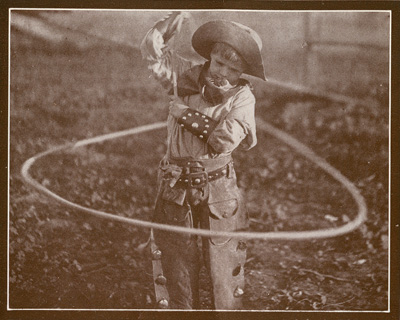
Danny, is said to be the youngest and smallest cowboy in the world. His performances will be seen in the Méliès pictures, spinning the rope, and doing some very clever riding. The way he mounts a horse twice his height, without any assistance, and direct from the ground, is a marvel.
(from The Motion Picture Story Magazine, July 1912)
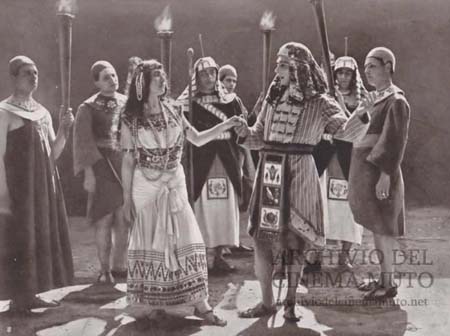
Francesca Bertini e Amleto Novelli, La Rosa di Tebe 1912
Messa in scena: Enrico Guazzoni
Interpreti principali: Francesca Bertini (Selime, la rosa di Tebe), Amleto Novelli (Efrain), Ignazio Lupi (Ramsete).
Lunghezza metri 574
Film scomparso.
Argomento:
Il re Ramsete sente vantare le bellezze di Selime, detta la rosa di Tebe. Incuriosito, si traveste e si reca a vederla: ne rimane ammaliato e la fa rapire e condurre ai propri palazzi, innamorandosi perdutamente. Scongiuri, preghiere sono vane al cuore di Selime, che ama Efraim, il pastore; il quale, furente di gelosia, attenta alla vita del re e vien messo in prigione. Ora Selime è arbitra delle sorti di Efraim; si conceda ed il pastore sarà libero. Ma Selime rifiuta sdegnosamente e Ramsete perde ogni speranza di amore. Allora ordina che il pastore colga la rosa di Tebe e le nozze avvengono con grande solennità. Chiamati gli sposi alla reggia, vien consegnato a Selime un cofanetto da parte del Re: è il regalo di nozze. Efraim l’apre e vi trova uno stile lordo di sangue: è l’arma con cui Ramsete si è trapassato il cuore…
Recensione:
I dramma storici ritornano di moda e la Cines in questo genere di lavori ha sempre ottenuto il plauso incondizionato della critica e successo entusiastico del pubblico.
La moda ha voluto che per qualche tempo la casa romana tralasciasse il genere che è suo onore e suo vanto; ma ora che la parentesi dei lavori moderni è per chiudersi per volontà dello stesso pubblico che l’aprì, auguriamoci che la casa romana non indugi più oltre e riprenda a fabbricare il suo genere nel quale poche case soltanto la possono contrastare il primato.
Ciò noi pensavamo poche sere or sono assistendo alla rappresentazione della Rosa di Tebe, il forte dramma di Re Ramsete, ora soltanto comparso sul panno bianco dei cinematografi di Napoli, ma già lusinghiermente accolto in altre città d’Italia.
Rosa di Tebe ha tutte le qualità del dramma: passioni violente che si sprigionano da nature eccezionali, delicati sentimenti eternamente in contrasto con forti passioni e poi un esteriorità pomposa, impressionante che da al contenuto maggiore allettamento e maggior forza, aggiungendovi bellezza e colore.
La novella è bella: Un Re egizio Ramsete vede la pastorella Rosa di Tebe e se ne innamora e la fa rapire ; ma invano ne spera amore, poiché ella ama Efrain, il pastore bello e selvatico col quale ella ha passato deliziosamente ore lietissime d’ amore tra i campi. Re Ramsete questo amore non può cancellare dall’animo della vergine egizia e si sacrifica, egli che tanto 1′ama, permettendo che ella sposi il giovine pastore. Nel giorno delle nozze però egli si uccide ed ai due sposi dona il pugnale col quale si è colpito.
Quanta bellezza in questa lieve novella o quanta delicatezza e quanto sentimento nel Re egizio e quanta forza nella giovine vergine, che pure colmata di onori e di ricchezze dal suo regale amante, puro accontentata in ogni cosa, non dimentica il suo Efrain che per lei sospira e per lei attenta alla vita del Re, che violentemente gliela tolse.
Interpreti del lavoro sono stati la Bertini, il Lupi e se non erro il Bracci (Amleto Novelli n.d.c.). Questi ultimi pur rendendo bene la parte loro affidata non hanno recitato con l’usata vigoria, ma la Bertini ha fatto della sua parte una vera creazione, rivelandosi attrice intelligente e fortissima. Specie nella scena con Re Ramsete noi abbiamo notato le doti di questa artista impareggiabile alla quale si va schiudendo un brillante avvenire, che potrà essere veramente radioso se la brava, attrice continuerà a mettere sempre lo stesso studio e lo stesso impegno messo in qualche scena di questo lavoro.
La messa in scena nel suo sfarzo ha rivelato troppo le artificiosità del cartone, in ispecie nella scena gran luce ove la crespe del falso e dello sbiadito appaiono con maggior risalto.
Rosa di Tebe ha, dunque, pregi non comuni di bellezza e noi ne siamo lieti perché col trionfo di questo lavoro trionfa anche l’industria italiana nel nome, di una tra le più accreditate nostre case.
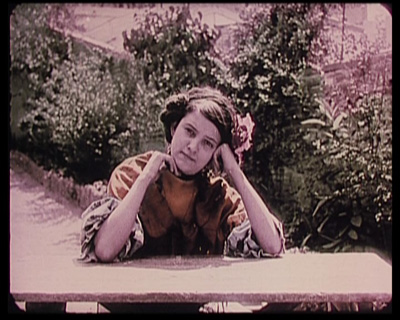
La bella e superstiziosa Mercedes non può vedere gli zingari. Mentre sta parlando con Pedro, il fidanzato, una zingara fattucchiera le si avvicina, chiedendo l’elemosina, ma Mercedes la scaccia.
La disgraziata si allontana gettandole uno sguardo pieno d’odio e, rimasta sola, Mercedes vede in sogno la zingara vendicarsi crudelmente di lei e attirare Pedro in un tranello, dove egli cade in preda delle allucinazioni più folli.
Risvegliata dal terribile incubo, la graziosa andalusa, s’affretta di conciliarsi le buone grazie della gitana ch’ella aveva poc’anzi scacciata.
Affisso a colori di m. 1,20 x 1,60
Soggetto, messa in scena, fotografia, trucchi, attribuiti a Segundo de Chomón. Título original: Superstición andaluza. Prima visione in Italia: novità Pathé della 179a settimana (9 al 15 giugno 1912).
 sempre in penombra